 Wrocław’s Battle for the Airwaves During Martial Law



Jolanta PAWNIK
‘When recalling the history of the opposition in the 1980s, we most often remember strikes, demonstrations and the underground press. Far less frequently do we think of those who, risking severe reprisals from the regime, fought their battle over the airwaves. During martial law, Wrocław became home to one of the most active underground radio centres in Poland,’ writes Jolanta PAWNIK
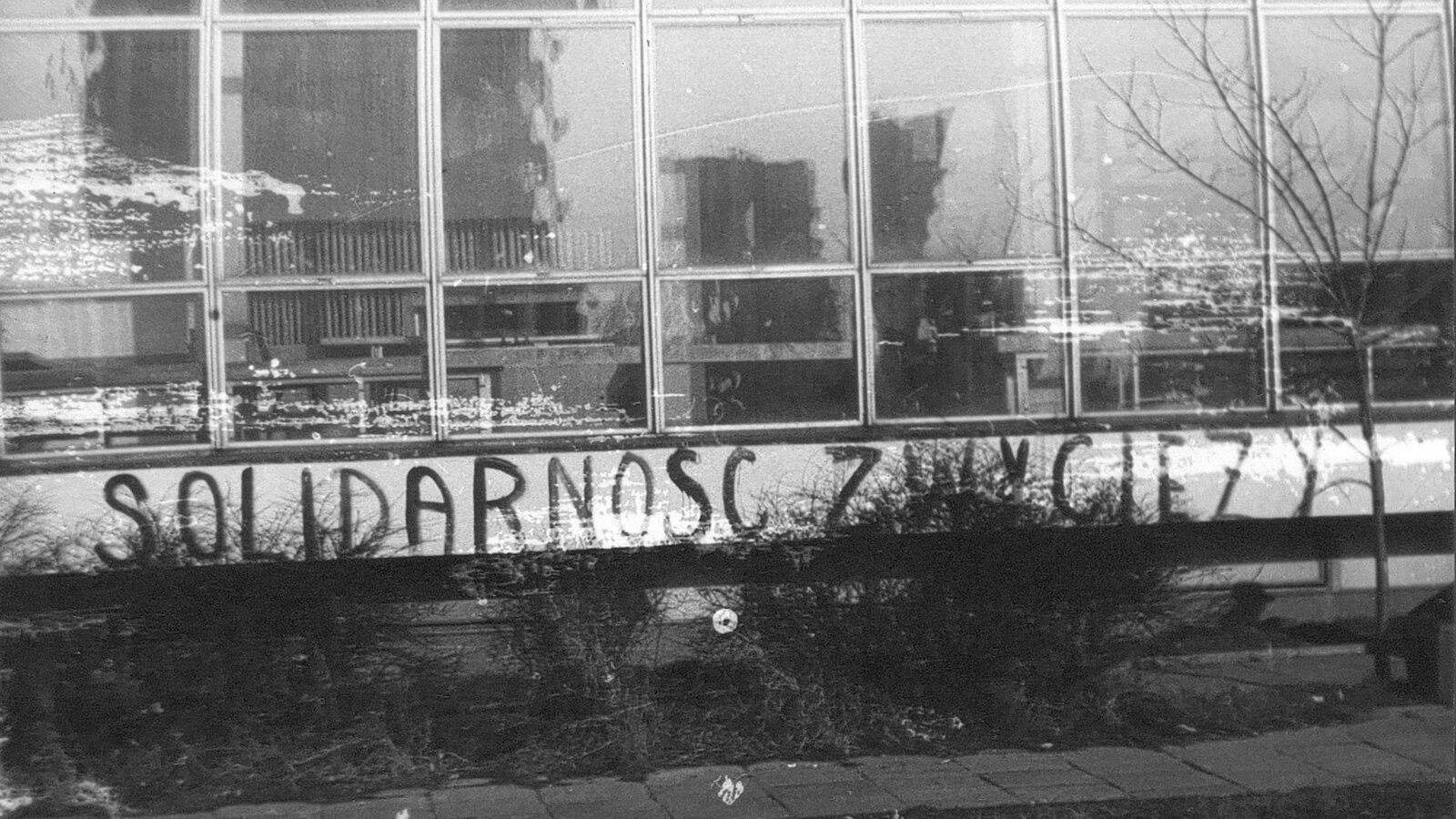
.Even before martial law was imposed, the Radio Section of the Independent Self-Governing Trade Union ‘Solidarity’ (NSZZ ‘Solidarność’) in the Lower Silesia Region operated in Wrocław. Its final broadcast was transmitted in the early hours of 13 December 1981 through loudspeakers placed outside the union’s headquarters. In the aftermath of internments and repressions, the opposition’s radio structures had to be rebuilt from scratch under clandestine conditions. Preparations for broadcasting an independent radio programme began immediately.
The first results on the airwaves came on 27 June 1982, when Fighting Solidarity Radio aired its first experimental broadcast. Founded by Kornel Morawiecki, Fighting Solidarity quickly became one of the country’s most important opposition organisations, bringing together engineers, physicists and electronics specialists. Their expertise proved invaluable in building the underground radio network. Fighting Solidarity Radio was the first opposition radio station not only in Wrocław but in the whole of Lower Silesia.
Initially led by Romuald Lazarowicz, the group broadcast short news bulletins lasting several to a dozen minutes, interspersed with music. For security reasons, broadcasts had to remain brief, as every extra minute increased the risk of the transmitter being detected by the security services. They reported on opposition activities, covered demonstrations and informed listeners about the arrests of activists. Patriotic and anti-regime songs were played as well. For many listeners, however, the greatest comfort was simply knowing that someone on the other side of the microphone was still speaking in a voice independent of state propaganda.
In subsequent years the underground station was headed in turn by Krzysztof Tenerowicz, Wojciech Bartoszek and Wiesław Cupała. From the turn of 1984 and 1985 until the end of its existence it was directed by Jan Krusiński. ‘I was broadcasting simultaneously from a dozen, sometimes even several dozen transmitters. They jammed the government station within a radius of about 500 metres, but there were so many of them that I could broadcast whenever I wanted,’ he reflected on the station’s final years.
At first, broadcasts were transmitted using low-power homemade transmitters assembled from components available in ordinary shops. Listeners tuned in to unused frequencies, with broadcast dates announced beforehand in the underground press. The transmitters operated automatically, activated by ordinary kitchen timers. ‘A transmitter the size of a tube of toothpaste was carried in a toothpaste box. The aerial was made from television antenna wire. The soldered batteries fitted inside an IXI washing powder box. There was also a cassette recorder containing the programme hidden in another box,’ recalled Stanisław Mitek, known by the codename ‘Student’, an electronics specialist and the first technician of Fighting Solidarity Radio.
The transmitter was usually hidden on the roof of a building or in the drying room on the top floor of a tower block. The aerial was attached to a window frame and, once the broadcast ended, an activist sitting discreetly on a bench outside would retrieve the equipment and carry it away. Programmes were recorded onto cassette tapes and copied. As Stanisław Mitek later commented, the copies were far from perfect, with constant feedback and squealing. ‘There was a lot of static, but we decided it didn’t matter because everything could still be heard,’ he said in a 2020 interview.
After some time, the homemade transmitters were replaced by state-of-the-art, high-powered devices smuggled into Poland from Germany. German collaborators concealed them in shipments of humanitarian aid. These powerful transmitters were barely the size of a packet of cigarettes, while their batteries could be hidden in a hiking rucksack. Each transmitter broadcast one fifteen-minute segment of an hour-long programme from a different location, making it much harder for the authorities to locate them.
One of the most remarkable broadcasts took place on 31 August 1985, when the transmitter was hidden among flowers placed on the grave of Kazimierz Michalczyk, an employee of the Elwro electronics works who had been fatally shot by the Citizens’ Militia during a demonstration three years earlier. ‘There were various ways of reaching society. One was broadcasting from rooftops and tower blocks on a free frequency; another, perhaps even more effective, was broadcasting on the frequency of Polish Radio,’ Kornel Morawiecki recalled in a 2020 programme.
The communist authorities devoted considerable resources to tracking down the underground radio. Special radio direction-finding units, Security Service officers and even helicopters equipped with tracking devices were deployed. According to participants, hundreds of officers in Wrocław were assigned to combat the illegal broadcasts. The paradox was that this vast state apparatus pursued people whose programmes often lasted only a few or a dozen minutes. The security services generally needed around twenty minutes to locate a transmitter. Although the Security Service mounted extensive operations and managed to detect and confiscate several transmitters, none of those involved suffered repression.
Fighting Solidarity Radio was not the only underground station operating in Wrocław during the early years of martial law. On 29 August 1982, Radio NSZZ ‘Solidarity’ of the Lower Silesian Regional Strike Committee broadcast its first programme. The date was carefully chosen: two days later marked the second anniversary of the August Agreements, while underground activists were preparing demonstrations to remind the public that Solidarity still existed.
.Radio ‘Solidarity’ continued broadcasting until the mid-1980s before returning to the air in 1988 in cooperation with activists from the Independent Students’ Association. Fighting Solidarity Radio remained on air virtually until the end of the Polish People’s Republic. Over those years, dozens of designers, announcers, technicians and distributors passed through the underground stations, many of whose names remain unknown today.