 European Space Agency in Wrocław. Not merely an investment, but a development choice for Poland


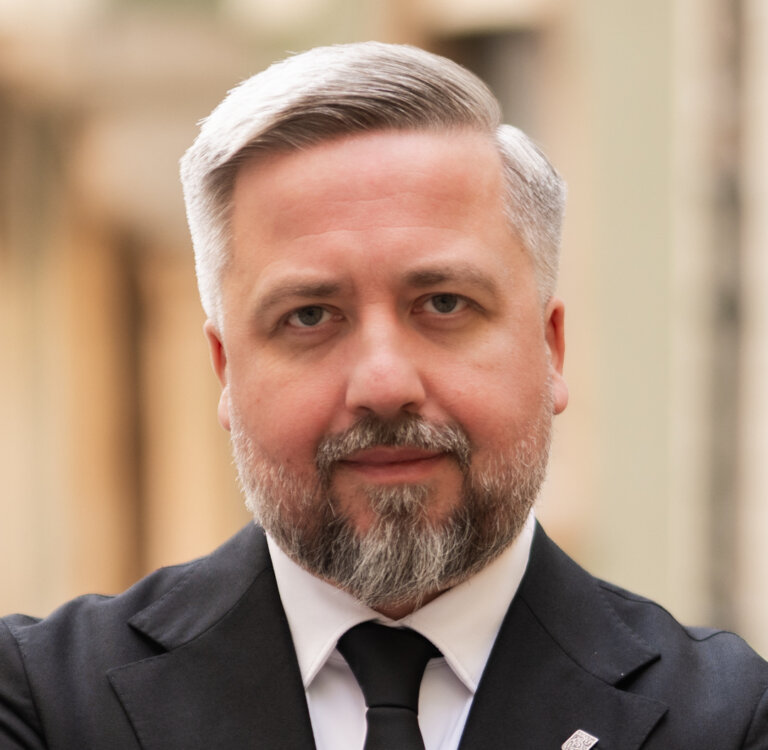
Radosław MICHALSKI
Magdalena OKULOWSKA
‘As Europe grows ever more aware of the importance of technological sovereignty, the question of where to locate Poland’s office of the European Space Agency is no longer simply an administrative decision. It has become a question of what kind of development model Poland wishes to pursue: a centralised and imitative one, or the one rooted in cooperation between science, technology and urban innovation ecosystems. It is in this broader context that Wrocław becomes a particularly compelling candidate,’ write Radosław MICHALSKI and Magdalena OKULOWSKA
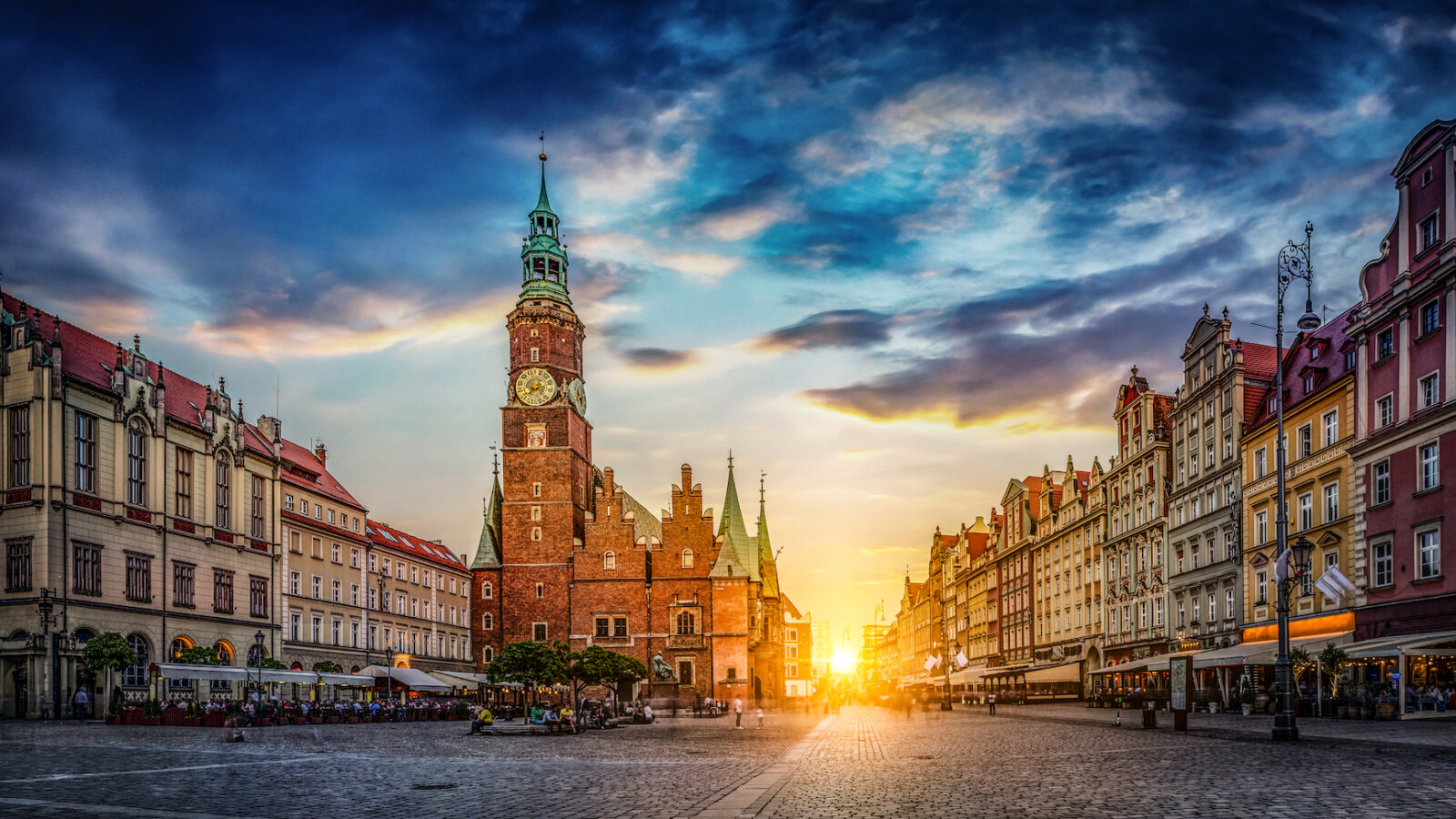
.Europe’s space sector is no longer merely a matter of prestige. It has become part of the continent’s critical infrastructure, communications, data analytics and technological independence – in short, part of what we might call the new architecture of security. And Wrocław is not offering Europe yet another administrative location driven by fleeting local concerns. It is offering a space for collaboration.
Situated at the heart of the triangle formed by Warsaw, Prague and Berlin, the city is naturally emerging as a hub for integrating expertise of Central Europe, a region that is transitioning from being a subcontractor to a developer of technology and a leader in innovation.
The capital of Lower Silesia has been following this path for years, building its growth around projects designed to create lasting academic, technological and international capabilities. In attracting such investments, the city relies on a clear-eyed assessment of its own potential alongside the added value it can bring to the projects themselves. Wrocław has treated its bid to host the European Space Agency not solely as a multidimensional opportunity for the city and the wider region but also as a chance to maximise the return on the investment announced by the Polish government. Wrocław presents the European Space Agency with optimal conditions for growth and the integration of projects originating from Poland and the larger area, encompassing the Czech Republic and Germany. By doing so, the city could become a significant force in Poland’s space sector and a valuable instrument for soft technological and scientific diplomacy.
Today, Wrocław is one of the fastest-growing urban centres in Central Europe, as confirmed by last year’s reports from the Financial Times and Oxford Economics, among others. The city represents a confluence of academic, technological and cultural elements, much like a lens through which Europe’s history can be viewed. Destroyed by 80 per cent during the Second World War and completely depopulated in its aftermath, it became a place of hope and ambition fostered by its people — those who rebuilt Wrocław from the war’s ruins and those who shape the city’s development nowadays.
When Polish Prime Minister Donald Tusk announced plans to establish a Polish office of the European Space Agency, many cities expressed interest in hosting the project. Wrocław, however, approached the prospect not as a statement of ambition but rather as a task to be performed. An assessment of the city’s potential identified three key pillars: academia, the business sector – particularly its dynamic start-up ecosystem – and efficient local and regional government capable of bringing all these aspects together.
The three essential elements have informed all strategic choices for the city’s advancement, as without them, even the most promising visions may never have come to fruition. In the case of the European Space Agency project, there was no room for uncertainty. Wrocław sees it as a Polish and European investment that will demand dedication from all beneficiaries so that it can fulfil all the hopes placed in it. Viewed this way, the project is not an end in itself but rather a tool that fits seamlessly into Wrocław’s creative infrastructure, completing it like a missing piece of a puzzle. The establishment of an ESA office could give significant momentum to the space-related projects already operating in the city, the wider region and neighbouring areas (including regions in the Czech Republic and Germany, which have expressed support for Wrocław’s bid to host the European Space Agency). At the same time, these existing initiatives could bring considerable benefits to the agency itself, particularly by helping to secure grants and mobilise the funding needed for future growth and investment.
Wrocław has extensive experience in research and development cooperation, having made R&D projects a long-standing priority in attracting new investment initiatives. Such projects are crucial because they allow the city to make effective use of its existing resources while generating innovation and new technologies with applications across multiple sectors. On this foundation, a mature and dynamic business ecosystem has emerged, naturally complementing the city’s academic and institutional strengths. Wrocław and Lower Silesia have become places where the space sector is no longer an aspiration but a reality. A strong cluster of New Space companies is already operating in the region, delivering internationally significant projects and developing capabilities that until recently remained the preserve of the world’s largest space agencies.
Companies such as Scanway, Thorium Space, SatRev, Extremo Technologies and TerraEye develop technologies in Earth observation, nanosatellites, satellite telecommunications, communications systems and space optics. They create solutions that cater to market demand while also actively influencing the market’s future direction. The presence of global technology corporations such as Nokia further strengthens this ecosystem, particularly in telecommunications, a sector crucial to space infrastructure. As a result, local businesses operate in an environment conducive to scaling operations, securing advanced contracts and transferring innovation into the wider economy.
This foundation is reinforced by a strong industrial and R&D base. The presence of global engineering and technology centres – including Collins Aerospace, XEOS, XTPL, 3M, LG and Hewlett Packard Enterprise – has fostered a readily accessible pool of expertise in electronics, avionics, software engineering and systems testing, all developed to top-tier aerospace benchmarks. It is in conditions such as these that technologies capable of operating in the most demanding environments – including beyond Earth itself – are engineered.
Simultaneously, the city offers something that is crucial to projects of this scale: operational readiness. Wrocław Technology Park and Łukasiewicz – PORT Centre provide the infrastructure, research facilities and organisational support needed for the immediate commencement of operations. This eliminates the risks associated with a lengthy preparatory phase, allowing project organisers to focus on what matters most, that is, bringing their projects to life.
With all these contributions, Wrocław presents a holistic and seamlessly integrated ecosystem that spans research, technological development, implementation and commercialisation. For the European Space Agency, this means the ability to begin operations quickly, manage projects efficiently and influence the development of Europe’s space sector. For the city and the wider region, it entails the acceleration of ongoing processes and the development of expertise in areas such as Earth observation, satellite communications, data analytics, cyber security and critical infrastructure. The broader context in which this ecosystem operates also matters. Wrocław remains one of the best-connected urban centres in its part of Europe, whether by road, rail or air. Its proximity to national borders and well-developed transport infrastructure, along with access to international connections, means the city is naturally embedded within Europe’s wider network of economic and technological cooperation.
No less important is the human factor. With its high quality of life, strong educational offering (including 22 international schools) and welcoming atmosphere, Wrocław attracts and keeps specialists from both Poland and abroad. Much like in its post-war past, the city thrives by fostering ambition, hard work and collaboration.
That is why the European Space Agency project is not viewed here as a standalone investment but as a natural continuation of the city’s development trajectory. It is seen as a tool that strengthens existing potential and allows it to resonate at both European and global levels. Wrocław is not starting from scratch – it is inviting Europe into a project already underway. By the same token, locating an ESA office in Wrocław should not be understood as a symbolic gesture towards the city. Rather, it should be a decision grounded in the effectiveness of European investment and in the ability to build a lasting technological ecosystem.
A quarter of a century ago, Norman Davies titled his story of Wrocław Microcosm. In doing so, he intuitively captured the essence of a city that, over the centuries, has changed languages, borders and political allegiances, yet has never lost its capacity to reinvent itself, driven by an ambition to keep moving forward.
The history of Wrocław is not merely a sequence of events but a continual process of opening up – from the mediaeval city governed under Magdeburg law, through the turning point brought about by the Napoleonic era and the demolition of the city walls, to the post-war reconstruction and the experience of Solidarity, both as the anti-system movement and the inclination of spirit that defended the city during the flood at the end of the twentieth century. Each of these layers has left its mark on the city’s urban fabric and shaped the way its people think about community and the future.
Wrocław remains faithful to this logic of movement and reinvention. At a time when Europe is once again redefining its own role, the city does not retreat into history but treats it as a set point. It is a microcosm that once again seeks to reach beyond the horizon and, in doing so, write another chapter in Europe’s story.
Radosław Michalski
Magdalena Okulowska