 From Wrocław to the Top of the World


Jolanta PAWNIK
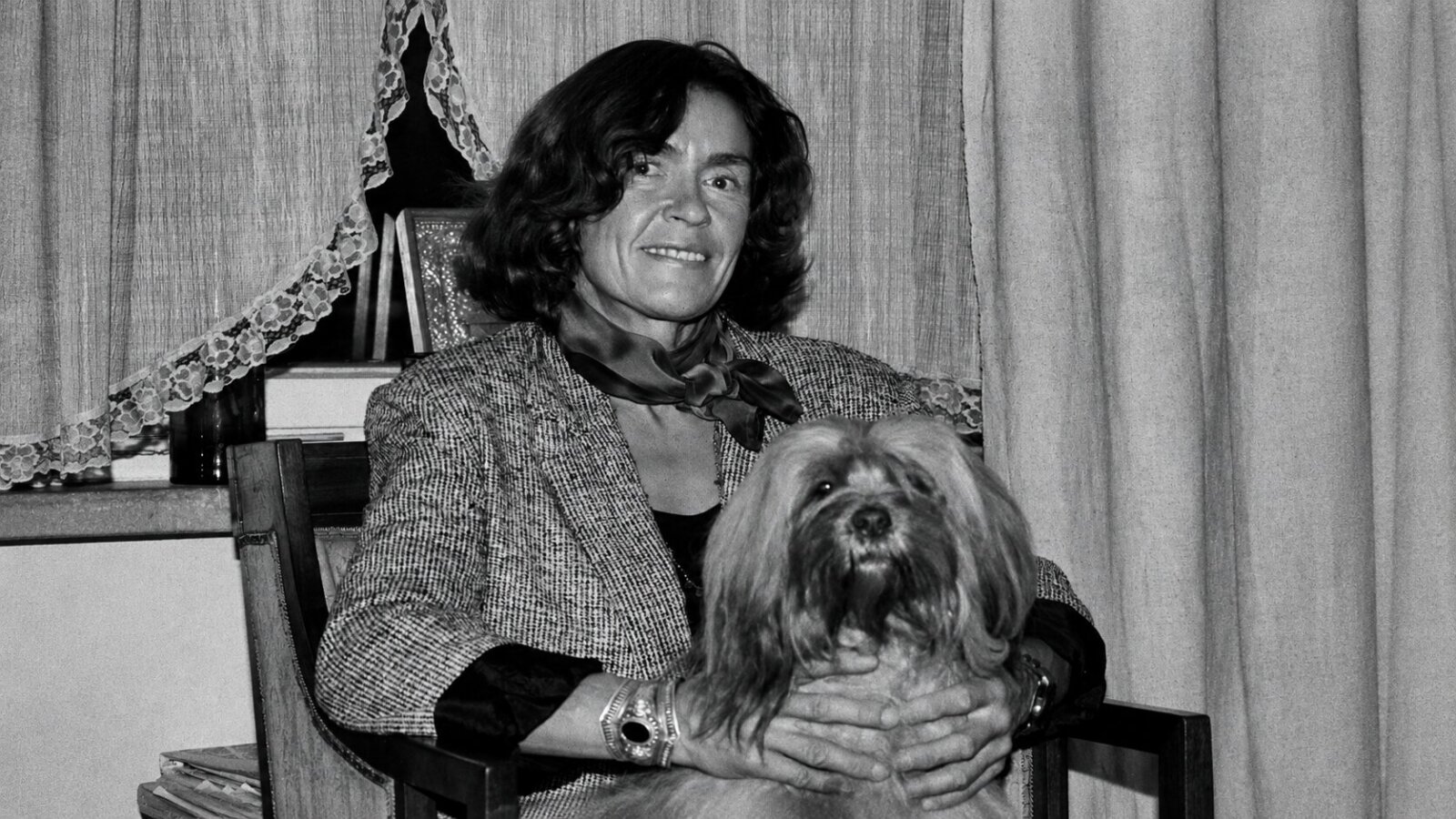
‘On 16 October 1978, Wanda Rutkiewicz reached the summit of Mount Everest. She was the first person from Poland, the first European woman and only the third woman in the world to stand on the highest point on Earth. Yet her journey to the Himalayas had begun many years earlier, in Wrocław. It was there that she grew up, went to school and university, played sport and worked. And it was there that she discovered climbing, the pursuit that would come to define her life,’ writes Jolanta PAWNIK
.She was born on 4 February 1943 in Płungiany (now Plungė), a town that had belonged to the Second Polish Republic before the war and is now part of Lithuania. After the war, the family moved first to Łańcut and then to Wrocław, where her father, Zbigniew Błaszkiewicz, took up a post as an assistant at Wrocław University of Science and Technology.
The family settled near Szczytnicki Park, which became a vast playground and, later, a training ground for the spirited young Wanda. ‘We lived in Wrocław, in Szczytnicki Park,’ she recalled years later. ‘There were plenty of opportunities for sport: in winter, skating on the pond and skiing down the slopes of Wrocław’s “Chimborazo” (…); in summer, high jump, acrobatics in the park’s clearings and swimming in the pools at the Olympic Stadium.’
Sport was part of everyday life in the Błaszkiewicz household. Wanda tried one discipline after another: running, high jump, javelin, shot put and swimming. She also went to Mount Ślęża with her father and siblings – an expedition into the high mountains, at least as far as a child was concerned. Later came hiking trips in the Beskids with the Scouts.
A passion discovered at university
.Throughout her childhood, there was little to suggest that mountains would become Wanda Błaszkiewicz’s greatest passion. In 1959, aged just 16, she completed her secondary education at Wrocław’s Second General Secondary School and enrolled in the Faculty of Communications at Wrocław University of Science and Technology. She trained in athletics from her first year before turning her attention to volleyball. She played for AZS Wrocław and then for Gwardia Wrocław in Poland’s top division. She was selected for the national junior team and included in the wider squad preparing for the 1964 Tokyo Olympics. As she later explained in interviews, her experience across different sports proved invaluable in the mountains. It had taught her discipline, stamina and a competitive spirit, as well as how to push beyond her own limits.
Her introduction to the mountains came through a chance meeting with Bogdan Jankowski, a climber from Wrocław who specialised in the Tatras. He took her to the Sokole Mountains in the Rudawy Janowickie range, one of Lower Silesia’s principal training grounds for climbers. There she tried rock climbing for the first time and fell in love with it. ‘That first day on the rocks gave me an experience that eclipsed everything else I had been passionate about. I had found something that was right for me, and I knew I would stick with it,’ she recalled years later.
Alongside her other sporting commitments, she began making regular trips to the Rudawy Janowickie and Karkonosze mountains. She became part of Wrocław’s climbing community, joined the local branch of the Polish Mountaineering Club and took an interest in caving. In July 1962, she attended a mountaineering training course at Hala Gąsienicowa in the Tatras. Two years later, she was climbing in the Alps.
From Wrocław to the high mountains
.In 1965, having earned a master’s degree in electronic engineering, Wanda began working at the Institute of Power Systems Automation in Wrocław.
Her climbing achievements soon began to mount. In 1968, she and Halina Krüger-Syrokomska climbed the east pillar of Trollryggen in Norway. In 1970, she summited Lenin Peak, her first mountain above 7,000 metres. Two years later came Noshaq in the Hindu Kush, followed by the north face of the Eiger in 1973. In 1975, she was part of the team that made the first ascent of Gasherbrum III.
By then, Rutkiewicz was one of the leading figures in Polish women’s mountaineering, and her ties to Wrocław were gradually loosening. She moved to Warsaw in 1972, where she continued working as an engineer while organising further expeditions.
The ultimate summit
.In 1978, Rutkiewicz joined an international expedition to Mount Everest. Snowfall and fierce winds came close to ending the attempt, but several days of fine weather finally opened a window of opportunity. On 16 October, she set out from Camp IV on the South Col. Around six and a half hours later, she reached the summit. She carried a Polish flag and a pennant of the Polish Mountaineering Association, and left a small stone she had brought from Poland. She had become the third woman ever to climb Everest, the first European woman and the first person from Poland to do so.
For Rutkiewicz, Everest was far from the end of the road. In 1986, she became the first woman to summit K2, the world’s second-highest mountain and one of its most formidable. In all, she climbed eight of the fourteen peaks above 8,000 metres. Her ambition was to reach every one of them. She never had the chance. In May 1992, during an expedition to Kangchenjunga, she was seen for the last time high on the mountain. Her body has never been found.
Traces of Wanda in Wrocław
.A symbolic grave commemorates Rutkiewicz at St Lawrence’s Cemetery on Bujwida Street. The outline of a mountain peak is carved into its granite slab. However, her mother, Maria Błaszkiewicz, never lost hope of seeing her daughter again. At her insistence, Wanda was not officially declared dead for another decade. Until her own death, Maria maintained that Wanda was alive, perhaps living in a Buddhist monastery in Tibet. For years, rumours and local legends circulated about a life spent in seclusion, but none of the supposed clues was ever substantiated.
Wrocław has not forgotten Poland’s most celebrated female mountaineer. A street has borne her name since 1997, and her bust stands in the Gallery of Famous Wrocławians in the Old Town Hall. In December 2018, a mural by Marta Frej was unveiled on a building at 4a Plac Legionów as part of a campaign honouring remarkable Polish women. The portrait was based on a photograph taken during Rutkiewicz’s 1969 trip to the Pyrenees.
In 2022, one of Wrocław’s trams, Moderus Gamma 2, number 3308, was also named after her. The exhibition ‘Freedom Climbers – Wrocławians in the High Mountains’, held at the Depot History Centre, recalled the beginnings of her climbing career in Wrocław and celebrated the local mountaineering community whose members ranked among the world’s best Himalayan climbers during the communist era.