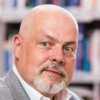
 For Poland and for Wrocław – Celebrating Kornel Morawiecki on the 85th anniversary of his birth


Jolanta PAWNIK
Most of Kornel Morawiecki’s adult years have been spent in Wrocław, even though he was born in Warsaw, specifically in Kamionek in the Praga neighbourhood. His studies, academic career, and ultimately his opposition activity wove the remarkable course of his life into the turbulent recent history of the city. This May marks the 85th anniversary of the birth of the founder of ‘Fighting Solidarity’.
.Kornel Morawiecki was born on 3 May 1941 into the family of Michał Morawiecki, a soldier of the Union of Armed Struggle and the Home Army, and Jadwiga, née Szumańska. He spent his early childhood in wartime Warsaw and the Jędrzejów region, where his family had sought refuge from the conflict. After the war, he attended General Upper Secondary School No. 4 in Warsaw. Having passed his final examinations in 1958, he set his sights on studying medicine but fell just a few points short of admission. Determined not to waste a year, he applied in a later admission round for physics at the University of Wrocław. The choice of location was far from accidental: a considerable part of his family and many of his friends were already living in the city and its surroundings.
Physics proved to be Morawiecki’s true passion; far greater than medicine. He was particularly drawn to research in quantum mechanics, and it was to this field that he devoted his doctoral dissertation, which he defended in 1960. He continued his academic work at the University of Wrocław, initially at the Institute of Theoretical Physics and later at the Institute of Mathematics. In 1973, hoping to secure staff accommodation more quickly, he moved to the Institute of Mathematics and Computer Science at the Wrocław University of Science and Technology, where he remained until 2009.
In March 1968, Kornel Morawiecki became involved in opposition activity. He took part in student protests, preparing and distributing leaflets calling for the release of detained students. In August of that year, he also participated in painting slogans on walls as a protest against the Warsaw Pact’s intervention in Czechoslovakia.
Reasons to oppose the communist system multiplied over the following years. Together with his associates, Morawiecki campaigned for a full account of the circumstances surrounding the death of Jan Palach and protested against the events on the Baltic coast in 1970. In 1979, he joined the team publishing the underground gazette Biuletyn Dolnośląski. His activities did not go unnoticed. From 1980 onwards, he was monitored by the Security Service under an operation codenamed ‘Harcerz’. The authorities continued to target Morawiecki’s activities until 1990.
Meanwhile, his family was growing. Since the promised staff housing never came to fruition, he took what was, at the time, a bold decision to build a house some dozen kilometres from Wrocław. Constructed largely by hand with the use of materials salvaged from demolitions, the house took several years to complete. In the meantime, the Morawiecki family expanded their landholdings and took up farming. With the encouragement of the local school’s headmaster, Morawiecki also accepted a half-time teaching post. This allowed him to become familiar with the local community and gain a thorough understanding of its concerns and needs.
The Morawiecki family home in Pągów, known as ‘Kornelówka’, became a meeting place not only for friends and relatives but also for opposition activists. It was there, among other things, that the idea was conceived of greeting John Paul II in Warsaw during his first pilgrimage to Poland with a banner bearing the slogan ‘Faith and Independence’. Morawiecki and his associates succeeded in carrying out the plan, narrowly avoiding arrest.
Over the subsequent years, the opposition activity of the group surrounding Morawiecki intensified their opposition efforts. The publication of the Biuletyn Dolnośląski was the subject of intensive scrutiny by the Security Service. Its editors faced repression, and successive print runs were confiscated. Morawiecki took on the task of organising the editorial work, seeking out contributors and building a distribution network. Distribution itself was often handled by the children of those who frequented ‘Kornelówka’. Morawiecki’s twelve-year-old son, Mateusz, who later served as Poland’s Prime Minister, was among the children involved.
In 1980, following the outbreak of the August strikes – first in Wrocław’s municipal transport system and then in other workplaces across the city – Kornel Morawiecki helped to coordinate strike action throughout Lower Silesia. At the strike’s ‘command centre’, located at the bus depot on Grabiszyńska Street, the first trade union structures began to take shape with his participation.
Morawiecki became a member of the Regional Board of the Independent Self-Governing Trade Union ‘Solidarity’ (NSZZ ‘Solidarność’) for Lower Silesia and continued his work on the Biuletyn Dolnośląski, publishing it also in Russian for Red Army soldiers stationed in Poland. It was, among other things, for this reason that he was arrested on charges of undermining the alliance with the Soviet Union. In response to his arrest, trade unionists threatened a general strike.
Shortly before the imposition of martial law, Morawiecki became involved in concealing printing equipment essential for the continued production of the underground press. On 12 December 1981, he transported the last duplicators in his small Fiat and hid them. Thanks to that, an underground print shop began operating in the very first days of martial law, publishing the periodical Z Dnia na Dzień in print runs of several thousand copies. All this time, the Security Service kept his family under surveillance and carried out raids on his house in an attempt to arrest him. For several years thereafter, Morawiecki did not return to ‘Kornelówka’, instead moving between the homes of nearly fifty trusted families.
From the very outset of martial law, Morawiecki was engaged in efforts to establish a central leadership for ‘Solidarity’, which remained highly fragmented. He also conducted radio-based counterintelligence work, which paved the way for future independent opposition radio broadcasts.
In June 1982, differences of opinion among opposition activists over the leadership of the ‘Solidarity’ movement in Lower Silesia became increasingly apparent. As no consensus could be reached, Morawiecki withdrew from the Regional Strike Committee of NSZZ ‘Solidarność’ and ceased all opposition activities conducted through it. On the same day, the members of the newly formed ‘Fighting Solidarity’ Agreement elected him chairman of the initiative. Its demands included not only fighting for trade union rights but also dismantling the communist system.
On 13 June 1982, exactly six months after martial law was imposed, the organisation staged a large demonstration in Wrocław. This quickly escalated into sustained street fighting. The effectiveness of these actions encouraged many to join the new formation. It is estimated that ‘Fighting Solidarity’ had approximately 2,000 members at its peak. A wide range of press titles and radio programmes were published and broadcast under its banner. ‘I remember myself from that period. I was, of course, opposed to communism, but above all, we fought for a Poland that was not plagued by lawlessness and unemployment. We wrote about this in the declarations of “Fighting Solidarity”. It was an idealistic vision, a different way of looking at the new possibilities that were opening up at the time,’ Kornel Morawiecki said in a conversation with Małgorzata Wanke-Jakubowska and Maria Wanke-Jerie for Wszystko co Najważniejsze.
‘Fighting Solidarity’ was subjected to particularly intensive surveillance by the Security Service. Within four years, the authorities had arrested all the organisation’s activists, all of whom had carried out their work in hiding. To capture Morawiecki, the then Minister of the Interior dispatched a special unit to Wrocław; the group, operating independently of the local security apparatus and militia, spent nearly a year tracking him down.
They succeeded in November 1987. Morawiecki was taken into custody at the Mostowski Palace and subsequently transferred to the prison on Rakowiecka Street in Warsaw. A wide range of opposition circles rallied to his defence, organising so-called ‘sandwich demonstrations’. In retaliation, the Security Service of the Polish People’s Republic prepared a series of provocations intended to discredit the leader of ‘Fighting Solidarity’, including the circulation of reports about the alleged interception of weapons destined for his organisation. The aim was to sow discord and unease within opposition circles.
Kornel Morawiecki and Andrzej Kołodziej, who had continued the former’s work after his arrest, were presented with the option to emigrate. Morawiecki refused, yet his departure ultimately proved unavoidable, as the authorities made it a condition imposed on Kołodziej, who had to leave in order to receive treatment for a serious illness. Although Morawiecki secured for himself a guarantee of return, the authorities of the Polish People’s Republic failed to honour this commitment – he was detained on a flight from Rome to Warsaw and sent back to the West. Eventually, he returned to Poland in disguise, using another person’s passport. The opposition community greeted his return with enthusiasm.
After the elections of 4 June 1989 – victorious for Solidarity-backed candidates – ‘Fighting Solidarity’ remained active for another year. It was then that Kornel Morawiecki came out of hiding and founded the Freedom Party. He ran in the 1991 parliamentary elections as its representative but did not secure a seat. In the years that followed, he stood several times for election to the Sejm or the Senate, eventually succeeding in 2015. Previously, he was also a contender for the Polish presidency. ‘The one thing we failed to preserve was solidarity. We allowed ourselves to be overtaken by crude notions of predatory capitalism and social egoism. We weakened ourselves spiritually. We accepted the Balcerowicz Plan and the sell-off of the material gains that our fathers had worked so hard to achieve in the aftermath of the war. Following our regrettable example, other countries in the region failed to protect themselves from a similar plundering,’ Morawiecki wrote of the political reality of free Poland in his article Co zrobiliśmy z naszą wolnością (What Have We Done with Our Freedom), published in Wszystko co Najważniejsze.
Alongside his work at the Wrocław University of Science and Technology, which he continued until retirement, Kornel Morawiecki served as editor-in-chief of the biweekly publication Prawda jest ciekawa – Gazeta Obywatelska. In 2018, he was appointed Chairman of the Council for Anticommunist Opposition Members and Victims of Oppression due to Political Reasons.
.He died during the 2019 parliamentary campaign, in which he was standing for the Senate as a Law and Justice candidate. A few months earlier, he had been diagnosed with pancreatic cancer. He was laid to rest at the Powązki Military Cemetery in Warsaw. ‘My father demonstrated in various ways that the significance of a cause is reflected by the number and strength of its opponents, and that great objectives can be achieved despite overwhelming adversity. I am grateful to him for many things, not least his powerful demonstration of this truth,’ his son Mateusz Morawiecki, then Prime Minister, recalled on the sixth anniversary of Kornel Morawiecki’s death.
On 14 November 2022, the Educational Centre of the Institute of National Remembrance ‘Przystanek Historia’ at 48 Jana Długosza Street in Wrocław was named after Kornel Morawiecki. A commemorative plaque bearing his likeness was unveiled on the occasion.