 Wrocław’s factories and forgotten brands. Reflections on a conference at the Depot History Centre


‘What became of the industrial strength of Wrocław and Lower Silesia? And why did so many once-famous brands disappear during Poland’s transition to a market economy? These questions were at the heart of a conference on the industrial heritage of Poland’s Western and Northern Territories, held at the Depot History Centre in Wrocław. They also serve as the foundation for an upcoming exhibition on Wrocław’s industrial past. “The industrial achievements of communist Poland in the Western and Northern Territories were truly impressive,”’ writes Kamil BORECKI.
.On 21 and 22 October 2026, the Depot History Centre in Wrocław hosted an academic conference entitled ‘Industrial Brands of the Western and Northern Territories’. The two-day event brought together 34 speakers from universities, research institutes and cultural organisations across Poland, including Wrocław, Zielona Góra, Toruń, Kraków, Olsztyn, Wałbrzych, Gdańsk, Poznań and Jelenia Góra. Their presentations explored the range and importance of the industrial brands that emerged in the territories incorporated into Poland after the Second World War. They also raised questions that deserve further thought.
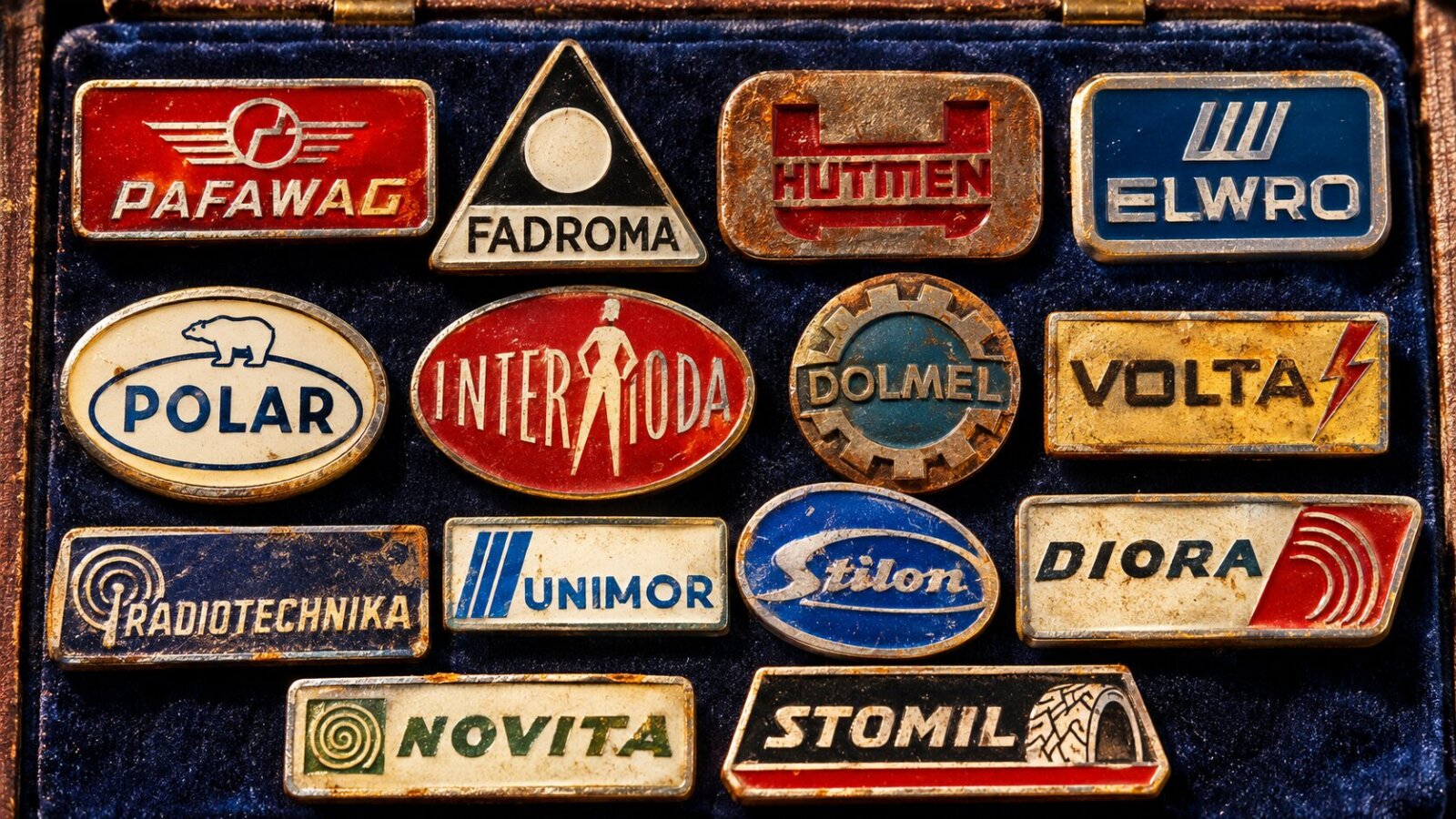
The industrial legacy of communist-era Poland in the Western and Northern Territories was impressive indeed. The region produced a remarkable number of household names, some of which became familiar well beyond Poland – in Western countries as well as elsewhere in the Eastern Bloc. Take Wrocław, for example. In 1980, it had no fewer than 723 industrial plants, responsible for around 3 per cent of the country’s total industrial output. The Lower Silesian capital was home to Pafawag, which built railway rolling stock; Fadroma, a manufacturer of construction machinery; Hutmen, a non-ferrous metalworks producing copper pipes, among other things; and Elwro, best known for its computers and other electronic equipment. There was also Polar, which made household appliances and consumer electronics, including Poland’s first automatic washing machine; the clothing manufacturer Intermoda; Dolmel, a producer of turbogenerators and turbine motors; the battery maker Volta; and Radiotechnika, which manufactured electronic equipment such as oscilloscopes and, in its early years, Poland’s first car radios.
The wider Western and Northern Territories had their own celebrated brands: Gdańsk’s Unimor, known for electronics; Stilon in Gorzów Wielkopolski, famous among other things for its magnetic tapes; Diora in Dzierżoniów, which made radios and, for a time, televisions; Novita in Zielona Góra, a producer of floor coverings; and Olsztyn’s tyre manufacturer Stomil. Shipbuilding was another important industry, with both seagoing and inland vessels built in the region. Even Wrocław’s river shipyard produced ships designed for use at sea.
These are only some of the well-known factories discussed at the conference. There were many others – so many, in fact, that one might be tempted to picture Poland as an industrial giant capable of making almost anything. The reality was more complicated. For all the communist authorities’ efforts, the country never became a leading industrial power on the world stage. Quality was not necessarily the problem: some Polish products could hold their own against Western competitors. The difficulty lay in how much it cost, in time and resources, to make them. Polish factories needed more labour, more materials, more investment and longer production times to turn out comparable goods.
For a long time, those weaknesses were easy to overlook. Demand was plentiful, both in Poland and throughout the Eastern Bloc. Products sold readily, often with little need for advertising. After 1989, however, the rules changed almost overnight. As Poland moved towards a market economy, state protection and the sheltered conditions enjoyed by its industries disappeared. Factories suddenly had to compete on an open market, under capitalist rules they scarcely knew. Many failed to adapt and went out of business, leaving widespread unemployment behind.
But the damage went beyond lost jobs. There is a grain of truth in the old joke that factories in communist Poland were better at producing social bonds than material goods. Under state socialism, large industrial enterprises – some employing several thousand people, and Gdańsk Shipyard as many as 16,000 in 1980 – became communities in their own right. They offered extensive welfare benefits, from organising holidays to allocating flats and even building housing estates for their workers. Beyond these tangible benefits were others, harder to measure but evident years later in conversations with former employees. Their work gave them pride and sometimes even a sense of purpose in life. Helping to build a ship, a loader or a computer meant knowing that one was making something important, useful and, no less significantly, impressive. A factory job offered not only employment and a wage but also the chance to fulfil personal ambitions.
One intriguing and less obvious theme at the conference was the relationship between artists and industry. The communist authorities expected art colleges, among other things, to supply designers for factories. Students were expected to spend time on placements, getting to know industrial processes and products before putting their design skills to work. It was an ambitious idea, though it never took hold on a large scale. Successful examples included Krystyna Pławska-Jackiewicz’s design for Fadroma’s WDT-1 road roller or the distinctive factory logos that many people still recognise today, even though most have long since fallen out of use.
Military production was another strand of the discussion. Many factories made equipment for the armed forces alongside their usual products. At the Archimedes works in Wrocław, agricultural machinery – including milking machines – shared the production line with ammunition and recoilless guns. Other cases were less surprising: Pafawag made railway wagons for the military, while Elwro supplied digital equipment. What remains unclear is how these contracts affected everyday production. Did military orders disrupt the output targets set by central planners? These questions have yet to be answered.
.These are just a few of the thoughts and observations inspired by the conference presentations. Fortunately, the participants’ efforts will be preserved in a collection of conference papers, expected to appear next year, so the discussions will have a life beyond the event. There is more to come for anyone interested in the industrial history of 1945–1989. The Remembrance and Future Centre is working on a temporary exhibition devoted to Wrocław’s factories, scheduled to open in the first quarter of 2027. An accompanying publication will trace the history of the most important products.
Kamil Borecki