 The City that Inherited Logic



Michał KŁOSOWSKI
‘What does it mean to think in Polish? Is such a thing even possible? When we consider different schools of thought and intellectual cultures, it often seems that the French and the Germans each have their own understanding of how one should think. But what about the lang along the Vistula? Or perhaps the Oder? Taking a closer look at the history of Poland’s most independent school of thought, the Lviv–Warsaw one, reveals that its most recent traces can be found in Wrocław,’ writes Michał KŁOSOWSKI
Logic as a Way of Life
.When Hugo Steinhaus arrived in ruined Wrocław after the Second World War, some saw him as a world-renowned mathematician, others as a refugee of history. He, in turn, saw the city slowly rising from the rubble as a place where a particular way of thinking could be preserved. When describing the intellectual identity of Poland and Wrocław today, it is impossible to overlook this man, who brought the spirit of the Lviv–Warsaw school of thought to this city despite speaking the language of mathematics rather than philosophy.
The Lviv–Warsaw school, from Twardowski to Kotarbiński, to Leśniewski and Tarski, taught Poland that thinking must be precise, honest and verifiable. That truth is not a matter of opinion but of rules; that it is what it is, as Tarski liked to say. This was not about formal logic alone, but about a certain intellectual culture: loyalty to argument, respect for facts, distrust of banality and rigor in reasoning.
Hugo Steinhaus, a co-founder of the Lviv mathematical milieu, stood squarely within that tradition. In his famous Sketchbook, he jotted down ideas that later grew into theorems. He held long conversations at the Scottish Café, where logic blended with humour, and mathematics was less a collection of equations than a discipline of thought. This was intellectual life in its purest form – one that, with Lviv’s departure from Poland, seemed destined to disappear.
The City that Regained Logic
.After the war, Wrocław was like a tabula rasa. A city without identity, without memory, sometimes even without inhabitants – and certainly without anything that could be called a social or intellectual fabric. And then, suddenly, a group of people appeared in this landscape as if from another world. They came from the east yet were Western at their core. For many, Lviv had been seen as the last city of Europe. Beyond it, there were supposed to be only steppes, Asia.
Hugo Steinhaus epitomised the identity of the last Europeans. He was a man who could name chaos, describe structures, identify rules and make all these things useful in everyday life. His work spanned multiple fields of mathematics, including functional analysis, probability theory, geometry and measure theory. Steinhaus also became known as a populariser of mathematics: it was on his initiative that the famous Mathematical Circle was founded in Lviv, bringing together young and gifted mathematicians, including Stefan Banach and Stanisław Ulam. He authored numerous scholarly works as well as popular science books. His approach to mathematics was marked by exceptional creativity and openness to new ideas. After the Second World War, he played an active role in Poland, including at the University of Wrocław, where he supported the development of the country’s mathematical community. He did not merely rebuild mathematics here – he rebuilt an ethos in which reason and clarity formed the foundations of public life.
This may sound lofty, but Hugo Steinhaus brought to postwar Wrocław something as essential as bricks and bridges: a sense of intellectual order. When we say today that Wrocław is a “city of science,” a “city of dialogue,” a “city of encounters,” we are to a large extent speaking a language that he planted here. Mathematics was only a tool; the goal was a culture of thinking. Thinking in a Polish way.
Logic as a Lesson in Modernity
.Today’s Poland could learn a great deal from Steinhaus. A distinguished Polish mathematician of Jewish origin, born in Lviv – then part of Austria-Hungary – he studied in Vienna and Lviv, and his education and early contact with the international scholarly world helped shape many minds in Poland and beyond. His elegant arguments, his refusal to be drawn to extremes and his distrust of simplifications seemed almost counter-revolutionary then and still do today. In an age of growing polarization, media tumult and the pervasive emotionalisation of public debate, Steinhaus reminds us that every claim requires proof, and every sentence must make sense. He wrote that there is no room for noise or aggression in mathematics. “One must think slowly and clearly,” he used to tell his students. This sentence could easily be displayed above the entrance to any contemporary parliament, television studio or internet forum.
Wrocław as the Heir to a Great Tradition
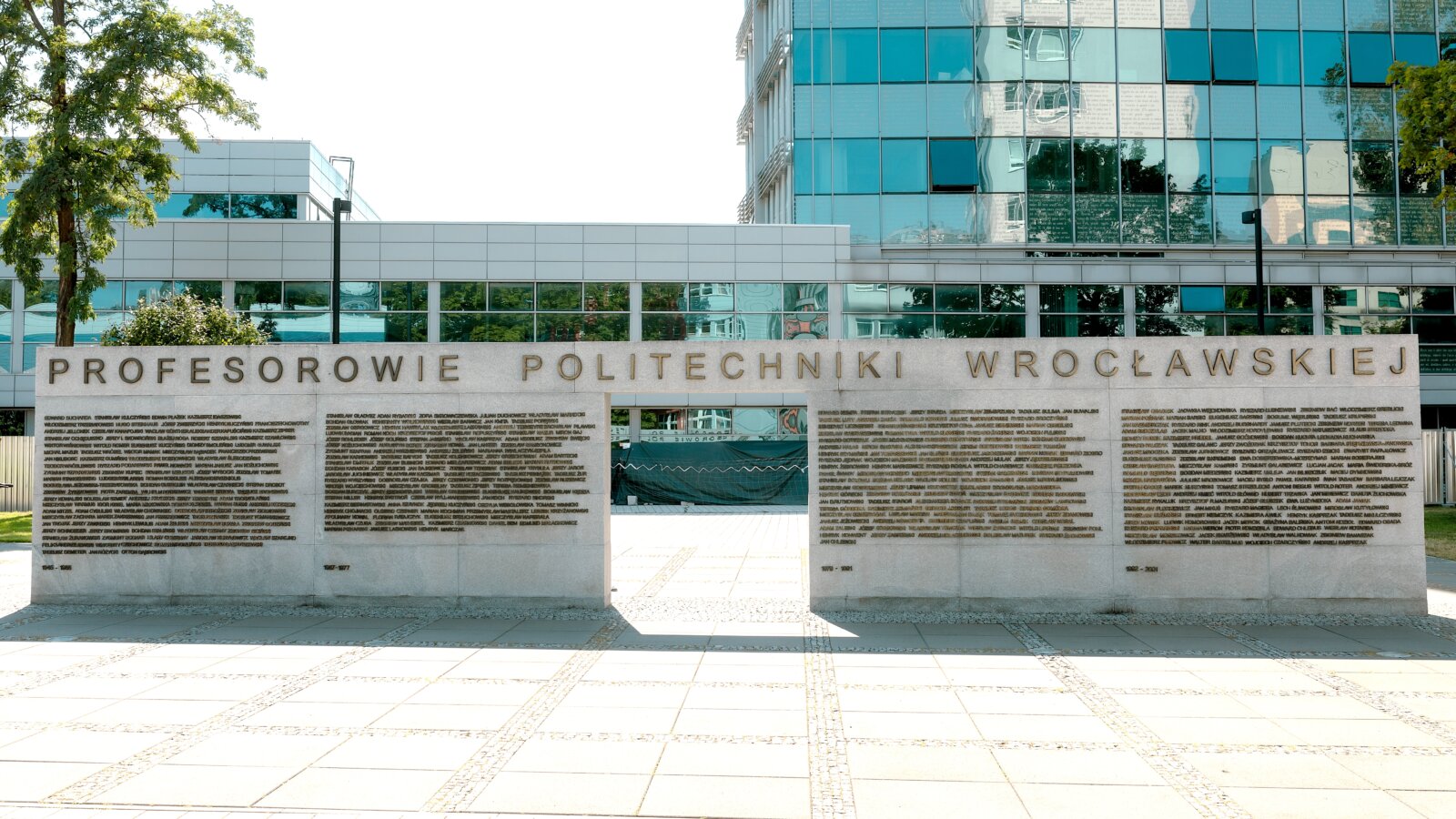
.It is a paradox: the greatest Polish intellectual traditions of the twentieth century, Lviv and Warsaw, were reborn in Wrocław, a city that before the war was not Polish at all. And yet it is here, at the University of Wrocław and the Wrocław University of Science and Technology, that their spirit lives on: a devotion to clear thinking and an openness to the world, coupled with the belief that learning is a hallmark of civilisation and that individuals like Hugo Steinhaus play a significant role beyond merely amassing academic honours. For Steinhaus did not merely arrive here; he inscribed Wrocław onto the map of European logic. He demonstrated that identity is not something that is simply inherited, but rather a task that transcends time and space. It can be built from ruins, as long as one starts with an order of thought before moving on to an order of streets. Wrocław is the prime example of this.