 Notes from the Jury – Reflections on the 19th Chopin Competition





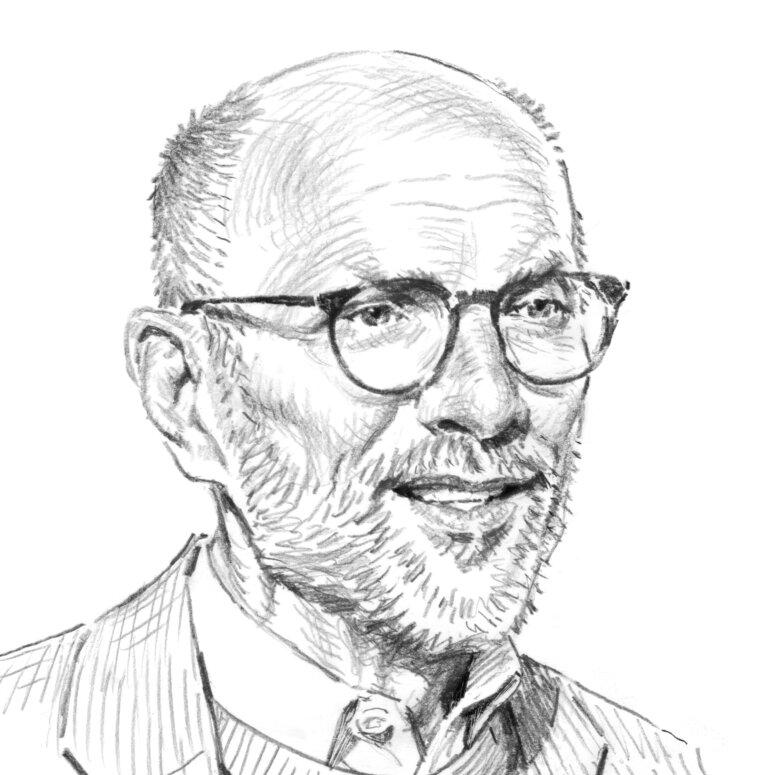
Prof. John RINK
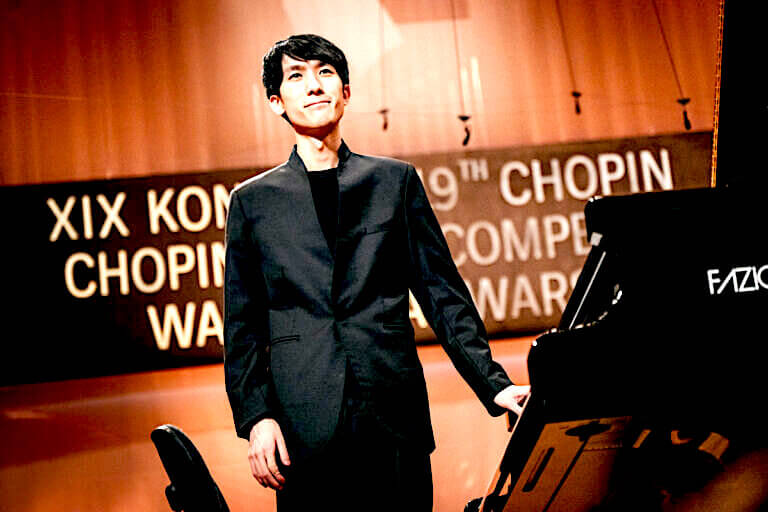
The International Fryderyk Chopin Piano Competition – held every five years in Warsaw – is one of the most prestigious events of its kind. Renowned throughout the world, the competition is followed with passionate interest by musicians and music lovers of all kinds.
.It has been my privilege to serve on the jury of the last three editions of the competition – the 17th in 2015, the 18th in 2021 and the 19th in 2025. Right from the start, I was amazed by the outstanding qualities of the young pianists I was listening to, and I also formed extremely positive impressions of the colleagues with whom I was working. In each of these editions, the jury had seventeen members in total, drawn from an international range of leading pianists, pedagogues, and others with extensive experience and expertise in relation to the music of Chopin.
One of the distinctive features of the Chopin Competition is its focus on the output of a single composer: whereas most competitions require contestants to perform works by various composers, the Chopin Competition is “monotechnic” in nature. For that reason among others, members of the jury need to have extensive familiarity with Chopin’s music. Despite the idiosyncrasies of our professional and artistic backgrounds, our shared knowledge and love of the Chopin oeuvre yield a strong collective understanding of what good Chopin playing entails – hence the broad consistency that can often be discerned from the scores awarded by the jury to individual contestants. There can be differences of opinion, too – just as one would expect from such a large jury. Hence the provisions in the rules for voting on the one hand and resolving disagreements on the other.
Profound knowledge of the repertoire is in fact a critical prerequisite to assessing “the interpretative skills of each participant in the Competition”, which, according to the rules, is one of the jury’s main tasks. The rules also state that “Each Jury member is obliged to assess the Competition participants impartially, in accordance with international standards for evaluating piano performance, and in particular with regard to the unique stylistic characteristics of Fryderyk Chopin’s works”. The generality of these criteria should come as no surprise: artistic decision-making requires not only knowledge and expertise on the part of each jury member, but also a general sense, an “intuition”, of why one performance is more artistically successful than others.
I myself look for superb pianistic ability, deep understanding of the music, and a uniquely personal artistic conception – but even these fundamental attributes are only part of what I hope to find. The first thing I attend to is the quality of the pianist’s sound and what it communicates to me as a listener. Chopin himself insisted on “the most beautiful sound”, though it alone is not enough to play his music well – a lesson that some contestants would benefit from learning. It is equally important not to savour the moment at the expense of tracing individual lines and overarching phrases, both of which are vital to the music’s impetus and direction. In addition, one must tease out the conflicting implications of harmony, rhythm, dynamics and so on. I want to hear the music being “discovered”, as if coming to life in an improvisation rather than being reproduced, as if learned by rote. The playing should flex and breathe, and technique should be used for expressive purposes, not as an end in itself. Although each jury member will have a personal take on these matters, I believe they form a common basis for our understanding of Chopin’s music and for assessing those who participate in the Chopin Competition.
Many people who follow the competition are not necessarily aware of the basis on which jury members make individual decisions and then reach an overall verdict on who should or should not receive a prize. In fact, a great deal more happens than simply coming up with scores on the basis of how much one “likes” or “dislikes” the artist on stage. My aim here is to shed light on what the jury does during and after each round, and at the end of the long process in which they and the contestants are engaged.
The Chopin Competition lasts several weeks and is divided into three rounds, followed by the finals. Round 1 last five days, round 2 four days, and both round 3 and the finals three days each. There is a day off between each of the rounds, allowing participants to draw breath. Long before the main competition begins, filtering occurs in a qualifying round and then a preliminary round, held in succession over a number of months. From the 642 applications received in 2025 – a record high – 171 pianists were chosen for the preliminary round by a small jury. During twelve days of auditions in Warsaw in Spring 2025, a different jury selected contestants for the main competition in October. In total, eighty-four pianists were admitted to round 1, of whom forty then proceeded to round 2, twenty to round 3, and eleven to the finals. Up to seventeen recitals were held on each day of round 1, ten per day in round 2, and up to seven per day in round 3. The finals this year were arranged in groups of three or four concerts on consecutive days. One can hardly exaggerate the degree of concentration and stamina needed to listen attentively and equitably to each of the 155 recitals in the most recent edition.
The rules provided by the Chopin Institute define the repertoire to be played in each round of the competition, including the qualifying and preliminary stages. There were interesting innovations in the 19th edition. In round 1, the pianists had to play one of five specified etudes, not two as in past years, along with one of three waltzes, which previously had been a requirement in the second round. Other round 1 pieces were to include a nocturne or similar work (drawn from twelve cited in the rules) and a longer piece – either one of the four ballades, the Barcarolle Op. 60, or the Fantasy Op. 49. The recitals in round 2 were longer in this edition – up to 50 minutes – and they were to feature at least six preludes from Op. 28 (either nos. 7–12, 13–18 or 19–24), a polonaise, and other pieces adding up to 40–50 minutes in total. Quite a few contestants played Op. 28 in entirety – an option unavailable in previous editions, when second-round recitals were shorter. The challenges grew especially tough in round 3, when pianists had to play one of the mature sonatas – either Op. 35 or Op. 58 – along with a set of mazurkas (drawn from eight opuses) plus other works yielding 45 to 55 minutes all told. The eleven pianists in the finals performed one of Chopin’s concertos with orchestra – as per tradition – plus the Polonaise-Fantasy Op. 61, a new feature which provided a yardstick for comparing the contestants.
Jury members assign individual scores to the pianists in each round on a scale from 1 up to a maximum 25. Descriptors were provided by the Chopin Institute for the points on this scale. Because the entry standard is so high, it was unusual for a contestant to receive scores below “Average” (that is, 12–15 points), though this did occur on occasion. Scoresheets were collected at the end of round 1, and immediately after each morning and afternoon session in the subsequent rounds. Jury members were allowed to make a small number of adjustments at the ends of rounds 2 and 3 once an individual gathered field had been established. Averages were then calculated by the Competition Secretary for each participant, and outlier scores awarded by jury members were nudged up or down according to a procedure outlined in the rules, producing a definitive average per contestant. In cases where a competitor was a student of one or more jury members as defined in the rules, no scores were given by those colleagues, and as such the competitor’s average was determined on the basis of the relevant subset of scores.
At the end of each of the first three rounds, jury members were provided with the adjusted averages for all contestants, arranged from high to low. No names were divulged, nor were jury members able to identify what scores had been given by their colleagues. (This degree of anonymity helps to avoid influence on each other’s judgements and to keep minds open about those performing in the next rounds.) The averages were then discussed, prior to deciding how many participants would advance. The procedure was similar after the finals, although now the jury had access to the names of the finalists as well as the average scores. This allowed us to conclude who should receive both the main prizes and the special awards. In the first two editions in which I took part, the results from each round were considered on their own, without reference to those from other rounds. Thus, only the scores from round 2 would determine who would progress to the third round, and only those from round 3 were used to select the finalists. In contrast, for the first time in 2025, a cumulative score was produced for each candidate. When calculating cumulative scores at the end of round 2, the round 1 score was weighted at 30%, and the round 2 score at 70% of the emergent total. To determine who would qualify for the finals after round 3, the scores from round 1 scores were weighted at 10%, from round 2 at 20%, and from round 3 at 70%. To produce the cumulative overall scores, round 1 was weighted at 10%, round 2 at 20%, round 3 at 35%, and score in the finals at 35%. The upshot was that contestants’ performances throughout the competition affected their position in the eventual pecking order, and it was indeed the case that some pianists who did well in earlier stages moved down because the more heavily weighted performances in round 3 and the finals exerted greater influence on the composite result.
After the outcomes of the 19th edition had been announced early in the morning on 21 October, considerable speculation erupted in the general press and on social media about why it had taken the jury “so long” to reach its decisions. In truth, the final meeting of the jury lasted no more than a few hours, and certainly not the four or five hours claimed by some. Once the last concert had finished at about 9.30 pm on the 20th, it took 90 minutes or so for the scoresheets and special prize nominations to be collected by the Competition Secretary, and then for the necessary calculations to be carried out. Therefore, the meeting did not start until after 11 pm, and it wrapped up at around 2 am, so roughly three hours later. That is not an exceptional length of time for the consideration of such consequential results and for decisions about who merited the prizes.
During the meeting, the rules of the competition were followed to the letter. After receiving the calculations, the jury discussed them in detail before ultimately confirming the original ranking and then awarding the prizes on that basis. During the course of these discussions, several alternative rankings were proposed by individual colleagues in line with a provision in the rules allowing adjustments of just one or two places in the final position, but these changes were not accepted by the majority (as defined in the rules), hence our collective decision to stick to the original results. The fact that those results were so thoroughly interrogated testifies to the jury’s commitment to achieving the most robust, defensible outcomes, and to the legitimacy of those outcomes in respect of all pertinent considerations.
Does that mean that the preferences of individual jury members were always fulfilled? Certainly not, but it could not be otherwise with a jury of seventeen people reaching decisions on the basis of consensus – a process that necessarily involves compromise. When scores of each jury member were published online by the Chopin Institute on 29 October, it became possible for anyone in the world to see precisely how each jury member had rated the successive contestants and what final rankings would have emerged on the basis of their personal preferences. Our scores have since been extensively analysed along these lines by a number of commentators, and numerous “theories” have been put forward about the respective scores. Suffice it to say that this level of scrutiny demonstrates not only the significance of the results of the Chopin Competition for many of its followers, but also the degree of fairness, transparency and rigour achieved by the jury and the competition organisers at all stages of the 19th edition, as indeed in recent editions.
There will be some listeners “out there” who remain disappointed by the results. To them in particular, I offer a few comments. First, it must be recognised that what the jury heard in the Warsaw Philharmonic is not the same as what those listening in broadcasts or on online platforms will have heard. Even within the jury, there were diverse listening experiences, depending on where one was sitting – whether on one side or the other, or in the front rather than back row of the jury desks. (It so happens that jury members occupied different positions for each of the four rounds, thus allowing us to hear each contestant from a range of perspectives.) Not only is it the case that the reactions of audience members were similarly conditioned by where they were in the hall, but performances observed only in video/audio recordings produced using microphones and up-close camera angles provoked even more divergent reactions compared with those of jury members perched in the Balcony, some distance from the stage. Moreover, the reactions of each and every person following the competition – including those on the jury as well as the millions of listeners “out there” – will have been shaped by their personal expectations and preferences. In that light, it is worth remembering that, when it comes to art, there is never a simple “right” or “wrong”.
.I am often asked whether I am content with the outcomes of the 19th International Fryderyk Chopin Competition, and my answer is a resounding “Yes”. That is not because my scores across the four rounds yielded the exact hierarchy tabled at the jury’s meeting on the evening of 20 October: on the contrary, a number of contestants would have done better on the basis of my scores alone, while others would have fared less well. I had also hoped for success on the parts of some contestants who were eliminated at earlier stages, including a few to whom I gave top scores of 25 points. I nevertheless understand – as each jury member does – that the process in which we are engaged is a democratic one, and that the point of having a large jury is to ensure that collective decisions are made which take into account the full range of criteria that might be brought to bear on the process, not just those of any one person or faction. Add into the mix the fact that Chopin’s music is among the most original, subtle, even inscrutable of any in the Western canon, and the need for a sizeable jury such as those on which I have sat becomes all the more obvious. It is undoubtedly true that a jury’s decisions will never match those of each and every listener “out there”, but that is just as it should be in the case of this particular composer and this particular competition.