 Chopin without white gloves. The hidden dimensions of Chopin’s relationship with Fontana
 Magdalena OLIFERKO-STORCK: Chopin bez białych rękawiczek. Nieznane oblicze relacji Chopina i Fontany




Magdalena OLIFERKO-STORCK
Fontana’s relationship with Chopin held layers of factual, psychological and artistic depth, only recently brought to light.
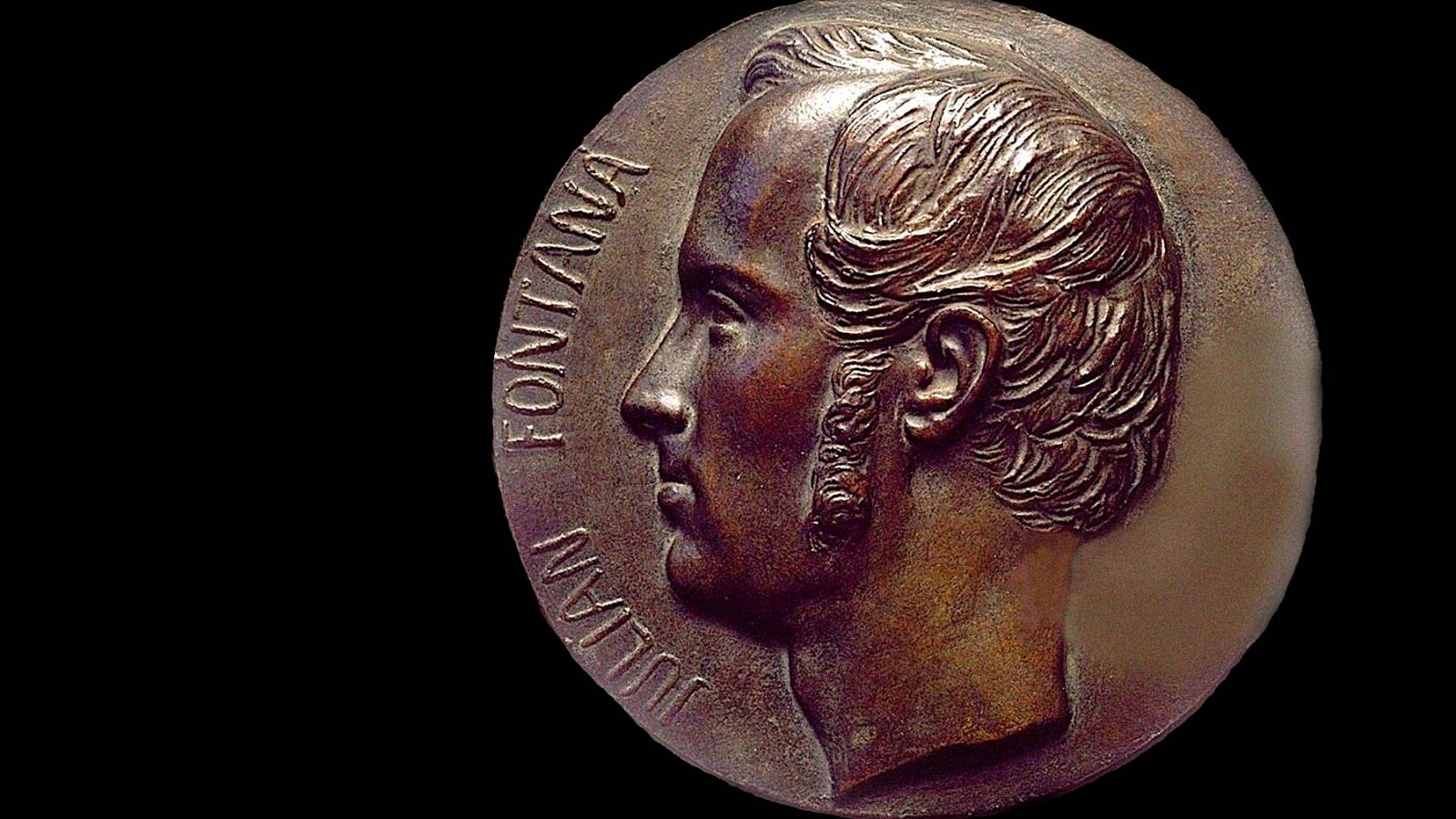
.As Chopin’s closest friend, longtime roommate, unofficial secretary, adviser, copyist and publisher of the Oeuvres Posthumes, Julian Fontana knew him as no one else did. In December 1838, referring to their extraordinary intimacy and the everyday life they shared, Chopin wrote to him from Valldemossa “…you can imagine me unkempt, without white gloves, pale as always” (all translations of quoted correspondence are by the translator of the article). Until recently, little research had been conducted into Fontana’s true role in Chopin’s life due to the lack of accessible sources. The estimation of their amicable relationship is based on surviving correspondence in which Chopin often articulates his feelings of friendship. At first glance, Fontana appears to have been deeply cherished by his master and graced with affectionate epithets such as ‘my life,’ ‘my darling’ and ‘my Juliusio.’
In truth, however, Fontana’s relationship with Chopin held layers of factual, psychological and artistic depth, only recently brought to light. For Fontana, their bond was, on the one hand, a source of exaltation and admiration for his friend’s mastery, and on the other, a cause of disappointment, memories of which endured long after Chopin’s death. Fontana expected tangible support from Chopin for his own talent, which he ultimately did not get. His letters to Chopin did not survive, which is unfortunate because they might have revealed a different aspect of their relationship. Yet hitherto unknown facts pertaining to it have been revealed in Fontana’s letters to Stanisław Egbert Koźmian, published in my book Fontana and Chopin in letters (Warsaw, NIFC 2013, translated by J. Comber). The full picture of the long and multifaceted story of the two men’s relationship can be found in my latest monograph, Julian Fontana: Wirtuoz w cieniu Chopina (Warszawa, NIFC 2025, w druku). Torn by emotion, Fontana is said to have confessed in 1838: “I would be sorry to leave Chopin, and I would like to part from him, for I have always put him above all others as an artist and still do. But as a man, I love him and cannot bear him. I would like to see him every day and to be a hundred miles away from him […]”
Julian Fontana was a truly Renaissance mind who distinguished himself across many fields. He was an accomplished virtuoso pianist, enjoying success in Europe and on the American continent; a composer who introduced Caribbean motifs into European music; a lawyer and astute market strategist; a polyglot translator, publicist, connoisseur of the Polish language and literature and a linguistic purist; a populariser of astronomical knowledge and the author of a treatise on astronomy; and, par excellence, a soldier of the Polish cause, who not only fought as a young man in the November Uprising, earning the Virtuti Militari, but who also remained actively engaged in Poland’s cause in exile, in London, Paris and New York.
Born in Warsaw in 1810, Fontana was the same age as Chopin. His fate became closely entwined with that of the future famous composer, who was a frequent guest at his house. The two young men formed a closer friendship at the Warsaw Lyceum, where from 1823 they attended the same class. Young Fontana had the chance to listen to his gifted friend play nearly every day; sometimes, they even performed duets for four hands. While Chopin’s opinion of his friend’s artistic pursuits developed over the course of their long friendship, its roots can be traced back to their student days in Warsaw. At Józef Elsner’s Conservatory, Fontana received piano and composition training in the ‘intermediate’ course, while Chopin finished a ‘full course in counterpoint and composition’ at the ‘advanced’ level under Elsner’s guidance. It was during their years at the Conservatory that Fontana’s musical sensibility began to take shape, formed in the close orbit of Chopin’s genius. It matured further in the years that followed, during Fontana’s Parisian exile, when he remained in constant proximity to Chopin.
The friends’ paths diverged briefly in 1830. At the beginning of November, Chopin set out on a journey to Europe from which he would never return. Soon afterwards, the November Uprising broke out in Warsaw, in which Fontana took an active part, rising to the rank of second lieutenant of artillery. In the first months of exile, the two young men renewed contact, although Fontana did not arrive in Paris until 1832, following a short stay in Hamburg. In Paris, Fontana moved in with Chopin and became his informal pupil. From that point forward, he identified so profoundly with Chopin’s educational ideals that he always introduced himself as Chopin’s student, a designation he also adopted when preparing editions of his works.
At the close of 1833, Fontana travelled to England, encouraged by the legendary virtuoso Ignaz Moscheles, who became the patron of his musical career on the Thames. It cannot be ruled out that Fontana’s decision was prompted by Chopin’s inadequate backing in Paris. His experiences of the uprising, his constant wandering and the pain of separation from those close to him left a deep mark – it seems that Chopin did not fully grasp this inner turmoil. Fontana remained in London between 1833 and 1835, devoting himself to teaching and to concert activity, with considerable success. He also participated in Polish émigré organisations, and his patriotic public appearances were received with appreciation. In 1837, he published The Polish National Melodies in London, which was the first collection of Polish national songs translated into English.
In 1835, Fontana returned to France in search of artistic fulfilment at Chopin’s side. He resided in Paris on and off until 1844, at times sharing accommodations with Chopin and at other times occupying his apartment when the composer was away in Majorca or at Nohant. Once in the city, Fontana quickly established a close working relationship with Chopin, acting as his copyist. By 1841 he had prepared some fifty fair copies for him, covering works from Opp. 25 to 49, which served as the basis for the French, English and German editions. Some of these he had to copy as many as three times. Fontana had a deep understanding of Chopin’s oeuvre and a remarkable intuition for his musical style. The composer was well aware of this and placed complete trust in his friend’s musical judgement and intelligence. During his absences from Paris, he entrusted Fontana with correcting manuscripts destined for print. At times, he even suggested changes that Chopin went on to adopt.
Fontana’s role during this period can hardly be overstated. From 1838, when George Sand entered Chopin’s life, his assistance became virtually indispensable. Absorbed in his relationship, Chopin – first in Majorca and later during his summer stays in Nohant – gave Fontana full charge of his affairs. These commissions extended far beyond copying manuscripts or negotiating with publishers, encompassing even the most mundane errands, with Fontana granted the authority to settle every minor detail. Chopin would ask him to choose a fashionable wardrobe or to find a perfect apartment in Paris’s finest districts. Once he even had him send an ivory-handled head scratcher to him. Availing himself of Fontana’s many services, Chopin would invoke his friend’s excellent ‘English taste’ and his knack for settling any matter, humorously dubbed by Chopin ‘sniffitis’. It seems, however, that he was entirely unaware of Fontana’s own expectations of their relationship.
The first signs of misunderstanding between the two friends emerged in the correspondence connected with Chopin’s stay in England in 1837. Before Chopin’s departure, Fontana had spoken of him in glowing terms to Stanisław Egbert Koźmian; after the composer’s return, however, he felt himself pushed into the background, a shift that precipitated a crisis in their relationship. A further catalyst was Chopin’s prolonged stay in Majorca and later at Nohant in 1838–1839 in the company of George Sand, during which Fontana found himself burdened with an endless succession of tasks.
In the autumn of 1839, shortly after Chopin’s return to Paris, Fontana made his first attempt to free himself from his friend’s influence. He set out on a concert tour into the French provinces, performing with great success in Bordeaux and Toulouse, where he presented, among other works, Chopin’s pieces. It should be emphasised here that Fontana played a major role in the wider dissemination of Chopin’s music. Concertising throughout much of Europe and later also in the Americas, he included Chopin’s works in the programmes of almost all his performances. Yet Chopin’s music was not always properly understood, which limited Fontana’s strategic success.
At the beginning of 1840, Fontana settled for a year in Bordeaux, where he worked as a teacher and gave concerts to considerable acclaim. Encouraged by this favourable turn, he decided once again to seek his fortune in Paris. In the spring of 1841, he found himself back in proximity to Chopin. His absence from the city for over a year had, however, damaged his standing, which he now had to rebuild almost from scratch. More than ever, he counted on the support of his friend – support that never materialised. On the contrary, Chopin soon left for Nohant for the summer season and resumed overwhelming Fontana with an endless stream of requests, in which he seemed to lose all sense of proportion. The growing misunderstandings between the two friends at this time were also clearly fuelled by George Sand’s hostility towards Fontana, even though in October 1839 Chopin had written to him that Sand regarded him as his ‘most logical’ and ‘best’ friend. During this period, Fontana’s need for independent artistic expression grew ever stronger.
At the cusp of 1841 and 1842, pushed beyond his limits, Fontana made a radical decision: he broke off contact with Chopin and began composing his own music. In April 1842, he confided to Stanisław Egbert Koźmian that Chopin’s ‘moral influence’ had been the reason he had so far refrained from composition. In the autumn of that year, he pointedly informed him that his meetings with Chopin had ceased entirely. Fontana published his first opus-numbered work (Marche funèbre) at the end of 1841 in the prestigious collective album Keepsake des pianistes, issued by Maurice Schlesinger, alongside works by Kalkbrenner, Mendelssohn, Moscheles, Rossini and Chopin. This publication placed him among the leading Parisian and European pianists. The beginnings of Fontana’s independent path, however, were far from easy.
In 1842–1843, Fontana performed in many of Paris’s most prestigious salons and concert halls, including those of Prince Adam Czartoryski, appearing alongside the cellist Jacques Offenbach. On 17 March 1843, he reached the peak of his artistic career with a benefit concert at the Salle Érard, an occasion that drew Chopin and many elite Parisian pianists, such as Sigismund Thalberg. Fontana received excellent press reviews, with critics proclaiming that he was following in Chopin’s footsteps. Fuelled by his success, he set out on a concert tour of France, Belgium and the Rhineland. His performances were met with thunderous applause, cementing his widespread acclaim. His restless nature – and above all the persistent ‘breath of Chopin’ at his back – continued to drive him towards the unknown. In 1844, he embarked on a spectacular journey across the ocean. In those days, crossing the Atlantic was fraught with danger, with steamships only having been in use for about twenty years. Before his departure, Fontana assured Stanisław Egbert Koźmian that should the homeland call, he was ready to return to Europe at once.
In the spring of 1844, Fontana arrived in Havana and settled there for a year and a half. On the island, he achieved considerable success and recognition, won through his virtuosity and his engagement with local traditions. It was in Cuba that Fontana composed his most spectacular work, Fantaisie La Havanne, Op. 10, drawing on Cuban, Creole and Spanish folklore. He was also the first to present Chopin’s music in Cuba, where it had previously been entirely unknown. It was not, however, properly appreciated, and the disappointment surrounding its promotion meant that when, a year and a half later, Fontana moved on to the United States, he omitted Chopin’s works altogether from the programme of his New York debut concert in 1846. In New York, Fontana achieved artistic fulfilment at the highest level, enjoying significant success, and the local press ranked him among the ‘most important piano professors’ of all time. He also became a commercial representative of the Parisian piano manufacturer Pleyel in the United States and remained politically active within the Polish diaspora, earning the esteem of his compatriots.
In April 1848, while in New York, Fontana received a letter from Chopin reproaching him for his neglect. The composer wrote: ‘You are a grumbler, a brute; in none of your letters have you given me a single kind word. But that does not matter; somewhere deep in your soul you love me, just as I love you. Perhaps even more now, for we are both great Polish orphans […].’
In the wake of the 1848 revolutions and the hope of an uprising in the Polish cause, Fontana travelled briefly to Europe in August 1848. Although Chopin was then in Scotland, the two did not meet. Instead, Chopin sent Fontana, who was in London, a deeply moving letter that would prove to be their last. In it, Chopin placed his friend on a footing equal to his own and – invoking the genius of Stradivari instruments – wrote: ‘We are old dulcimers […] fashioned by a famous luthier, some Stradivari sui generis […]’. These last letters marked a turning point where the estranged friends finally reconciled. But they never met again. In August 1848, Fontana returned to America, where, in the autumn of 1849, he learned of Chopin’s death. In 1851, Fontana left the United States and once more settled in Paris, this time permanently. From that moment, he dedicated himself to bringing Chopin’s previously unpublished works to light, a task he undertook with the sole permission of the composer’s family. He devoted nearly ten years to the titanic labour on Chopin’s Oeuvres Posthumes, securing his own place in history. In 1855, Chopin’s posthumous instrumental works appeared under Fontana’s editorship; four years later, in 1859, the sixteen songs prepared for publication by Fontana were issued.
During this period, Fontana’s beloved wife died unexpectedly without leaving a will, depriving him of legal guardianship over his stepchildren and his own daughter. Soon afterwards, he was struck by another tragedy: he began to lose his hearing and was forced to part from music. Deafened, yet still determined to serve Poland, Fontana redirected his energies toward literature. He published articles, produced the first-ever translation of Cervantes’ Don Quixote directly from the original into Polish (the unpublished manuscript later perished in a fire), issued essays Kilka uwag nad pisownią polską (1866, 1869) and Astronomia ludowa (1869) and wrote analyses of foreign scientific treatises for the Polish press.
.Living in poverty and suffering from physical illness, Fontana took his own life on the night before Christmas Eve in 1869 to preserve what remained of his late wife’s capital for his son. In his farewell letter to Stanisław Egbert Koźmian, he devoted one of the final paragraphs to Chopin.