 Italians’ Love for Chopin






Silvia BRUNI
The Polish composer has always held a special place in the hearts of the Italian people, cherished as an intimate secret whose veil of mystery is occasionally lifted.
.On 12 March 1960, the laurel of victory at the 6th International Chopin Piano Competition in Warsaw was claimed by an Italian, an eighteen-year-old Maurizio Pollini. From that moment on, the pianist from Milan was recognised worldwide as one of the emblematic figures of Chopin interpretation. What tradition of understanding the figure and oeuvre of the Polish composer lies behind the art of this remarkable man, who devoted his entire life, up to his final breath, to music, carefully cultivating his own vision of Chopin’s work?
Pollini’s artistic stance undoubtedly embodies a universal, profoundly humanistic perspective characteristic of the Italian aesthetic of art, one that both foregrounds the human values embedded in masterpieces and embraces the mission of making artistic beauty accessible to a wider audience. It was in the spirit of this outlook that Pollini not only pursued his own artistic career but also undertook demanding initiatives in musical outreach. Among them was – unfortunately seldom recalled – his co-organisation of concerts for workers at Teatro alla Scala as well as in sports halls and factories (particular renown is attached to the concert featuring the orchestra and choir of the Teatro Comunale di Genova under the baton of Bruno Martinotti at the Paragon printing works on 9 January 1972).
Pollini’s initiative gave practical form to ideas that had been clearly articulated and advocated many years earlier by another important figure in the history of Italian reception of Chopin: the composer, pianist and teacher Giacomo Orefice. His four-act opera Chopin, with a libretto by Angelo Orvieto (first performed at the Teatro Lirico in Milan in 1901) and based entirely on works by the Polish composer, is a unicum in the history of music and an absolute exception within Orefice’s own output. It served both as a response to the nationalist stance of the circles administering musical culture, gaining momentum after national unification, and as an effective means of popularising Chopin’s music. Yet due to its syncretic nature the opera provoked chiefly voices of opposition, directed largely against all manner of arrangements and reworkings of the Polish composer’s oeuvre.
It may be observed that, particularly in the period preceding the outbreak of the First World War, special attention to Chopin’s oeuvre in Italy was paid by figures committed to the development and dissemination of instrumental music. Another such figure, alongside those already mentioned, was the music critic Ippolito Valetta, the author of the first Italian monographic study of the life and works of Fryderyk Chopin (Chopin. La vita – le opere, Turin, 1910), which later proved to be based in part on an Italian translation of the manuscript of the first volume of Ferdinand Hoesick’s monograph, made by the Polish historian Adam Darowski during his stay in Rome.
It is important to recognise that the backlash against the opera’s monopolising position, fuelled by a desire to revitalise Italian instrumental music traditions, constitutes one of the defining features of late Italian Romanticism. As a result, the piano repertoire grew ever more varied, encompassing – alongside transcriptions of operatic arias, fantasies and virtuoso pieces – an expanding body of original compositions.
The first works by Chopin to be published in Italy were the Nocturnes Op. 9 (Epimaco e Pasquale Artaria, Milan, December 1835). In October 1836, Gazzetta di Firenze ranked Chopin among the most celebrated living composers. Two years later, Variations pour le piano-forte sur une mazurka de Chopin by Francesco Bicci was published, most likely, as the first piece of music directly inspired by Chopin to be written by an Italian composer.
At that time, Chopin was already a celebrated and esteemed figure, a remarkable detail given that just five years prior (in 1831), Beethoven’s sonatas were met with lukewarm reception in Milan.
The first article devoted to Chopin by an Italian author, titled Federigo Chopin. Pensieri d’un vecchio dilettante and signed by ‘T-li’ (Giuseppe Torelli, a namesake of the celebrated seventeenth-century violinist and composer), appeared in the Gazzetta Musicale di Milano in 1845. Written with a sense of humour, it impresses with the acuity and originality of its observations. It presents Chopin as the most recognisable composer in the panorama of European music, a true musical poet who ‘already in his lifetime created – not by invention, but by the heart – an original musical school’. The question of his national origin is not pursued, for what most captivates the critic is the universality of the artist’s musical language, which ‘seems to draw from the entire river of ideas that have never before manifested themselves, and knows how to present them in a manner uniquely his own, entirely personal’.
Alongside the music of Mendelssohn, Schumann and Liszt, Chopin’s musical idiom constituted an important stylistic and generic model for the development of autonomous piano music in Italy. Among those who contributed to this process were Stefano Golinelli, Adolfo Fumagalli, Giovanni Rinaldi, Carlo Andreoli and Alfonso Rendano, and above all Giovanni Sgambati and Giuseppe Martucci. Concurrently, the Italian piano manufacturing sector experienced significant advancement, with the Fazioli F278, selected by Bruce Liu in 2021 for the Eighteenth Chopin Competition, representing a recent notable achievement.
Chopin’s legacy continues to inspire Italian composers. Among the works of Alfredo Casella, for example, one finds Grazioso, dedicated to Chopin and based on the Prelude Op. 28 No. 7, included in Deux contrastes (1916), as well as the Sei Studi, Op. 70 (1942–1944), described as a “humble expression of admiration and gratitude towards the memory of F. Chopin and M. Ravel” (the fifth, Sulle quinte, is dedicated to Chopin). On the cover of De la nuit by Salvatore Sciarrino we read the subtitle: For the pure soul of Federico Chopin in the time of youth (Ricordi, 1971). Filippo Perocco (b. 1972) prefaced his preludes (composed since 2007) with the comment: ‘These are sketches, the beginnings of études. Or ruins, debris. Yet in each of these pieces it is written: “Composed by Fryd. Chopin”.’ In 2011, Ada Gentile wrote a prelude honouring the Polish composer.
At the turn of the nineteenth and twentieth centuries, even before the spectacular interpretations of Chopin’s works shaped by Busoni’s visionary and imaginative monumentality, Italy could already boast the ‘most brilliant and admirable performer of Chopin’ (‘Gazzetta Musicale di Milano’, 1889, no.4): the talent of the Florentine pianist, composer and pedagogue Giuseppe Buonamici. A pupil of Hans von Bülow, he had more works by Chopin in his repertoire than any other renowned pianist of the period. He performed Chopin’s études, concertos, waltzes, ballades and mazurkas in Milan, Bologna and Venice, as well as in London and Germany. One should also acknowledge Stefano Golinelli and Elisa Peruzzi, the latter a pupil of Chopin and the spouse of the Grand Duke of Tuscany who established her residence in Florence, as among the early Italian pianists whose recitals were instrumental in popularising the music of the Polish composer. Regarding the availability of Chopin’s original texts, two dates are of particular significance: 1862, when the first edition of Chopin’s complete works was published (March–October, Lucca edition, Milan) and 1907 when the inaugural compilation of Chopin’s correspondence edited by Gualtiero Petrucci was printed.
From the turn of the nineteenth and twentieth centuries, Italian audiences could hear Chopin’s works performed by foreign artists. Of these concerts, one of the earliest were given by Ignacy Jan Paderewski, who played at the Conservatory Hall in Milan on 1 February 1897, and at the Accademia di Santa Cecilia Hall in Rome two days later. On that occasion, peculiar events transpired: the enthusiastic audience assembled in the corridor before the concert broke a glass pane in the hall’s door. The listeners, predominantly women, navigated the broken glass to fill each available seat, ultimately leaving the box office with an excess of 170 lire.
It deserves emphasis that Paderewski’s pianism had a marked impact on Italian Chopin performance, most notably on the interpretative style of Rodolfo Caporali. In this context, mention must be made of the Chopinesque roots of Caporali’s playing, for his teacher was the unjustly forgotten Alfonso Rendano, a pupil of Thalberg in Naples and of Georges Mathias in Paris, admired among others by Rossini and Liszt. Rendano is today regarded as the foremost representative in Italy of a school deriving from Chopin (just as Sgambati is seen as the principal advocate of Lisztian pedagogy) and as a leading figure of the Roman piano school. He was known for encouraging his students to employ unconventional fingering for expressive and narrative purposes (for example, the use of fingers 1, 2 and 4 in rapid passagework, and the frequent use of thumbs on the black keys).
It would be impossible not to mention at least two further great artists of Neapolitan pianistic lineage who, from the 1940s–60s, consolidated their position within Chopin performance: Arturo Benedetti Michelangeli (who served on the jury of the Chopin Competition in Warsaw in 1955) and Sergio Fiorentino.
It is noteworthy that until the mid-twentieth century Italian writing on Chopin was marked, on the one hand, by a reception rooted in the statements of Franz Liszt and George Sand, and on the other by the influence of literary currents prevailing on the peninsula. The most enduring approach viewed Chopin’s work through the lens of pessimism and the aesthetic reflection of the Romantic poet Giacomo Leopardi. Among the works regarded as emblematic of Chopin’s personality and sensibility are the Nocturne in G minor, Op.37 No.1 and the Mazurka in A minor, Op.17 No.4, which inspired poems by Guido Mazzoni and Antonio Fogazzaro. During the period of Italian Decadentism, known as Crepuscolarismo, the figures of George Sand and Chopin acquired, respectively, the traits of a femme fatale and of the inept man (inetto), in many respects recalling Prince Karol from Lucrezia Floriani. The decadent image of Chopin as an eternal child, a dreamer, a ‘young god of fire, of air, of water’ (Savinio) persisted, albeit with numerous exceptions, until the late 1940s. A neorealist perspective finally made it possible to perceive the multidimensional nature of the composer’s existential experience, resulting in an emphasis on the contradictions and ethical dilemmas inherent in his personality. Analyses of Chopin’s creative personality and psyche are by no means lacking (including those by Lores Consano). A reassessment of George Sand’s influence, persisting until the mid-20th century, led critics to deem Chopin’s later compositions less significant, attributing their creation to a decline in his creative spirit.
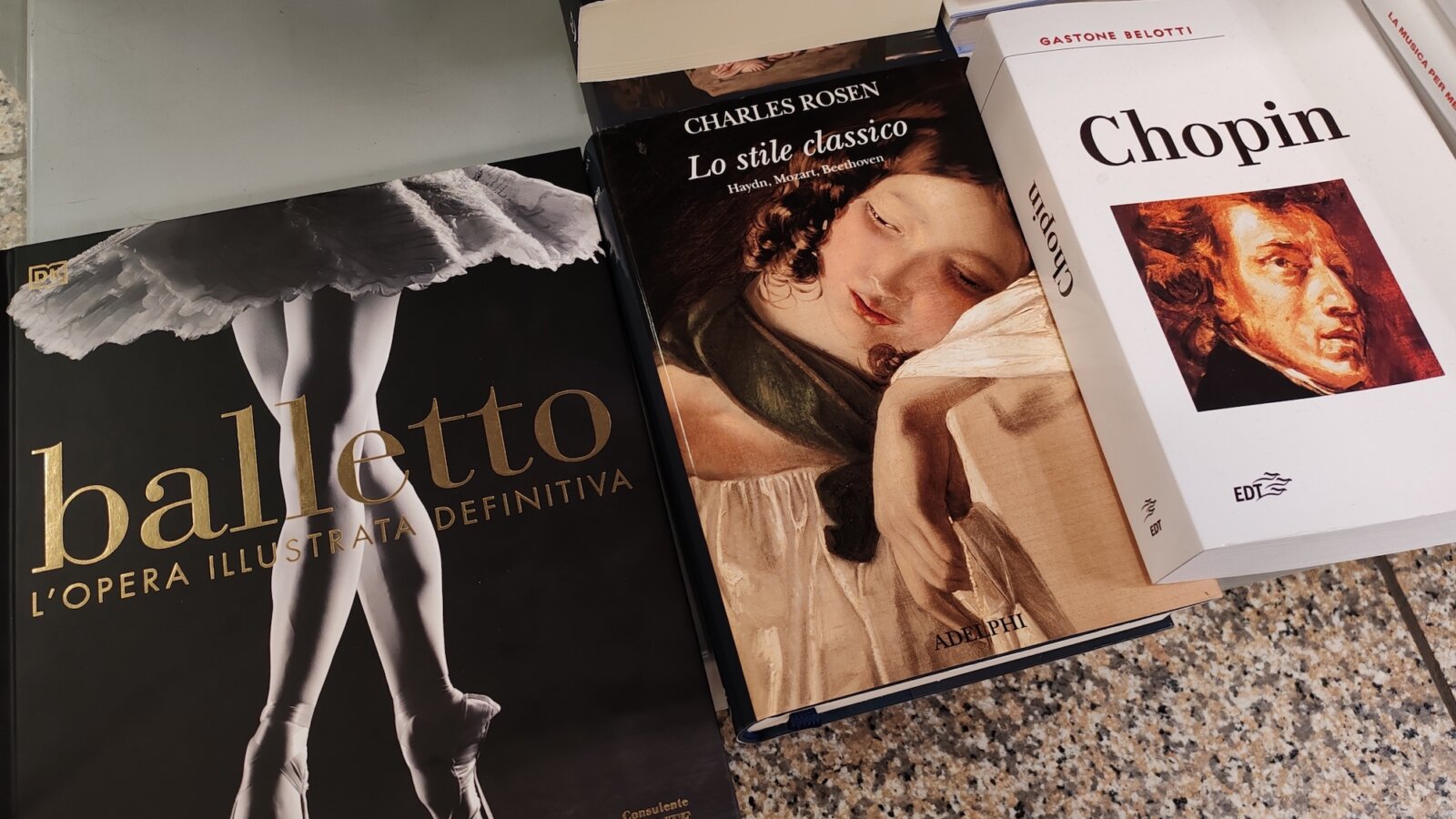
A pivotal moment in the development of knowledge about Chopin’s life and work in Italy came in the 1960s. It was then that Italian Chopin studies took shape, founded by Gastone Belotti, who in his youth studied piano with Gino Tagliapietra and earned his doctorate under Professor Fausto Torrefranca with a dissertation devoted to Chopin’s preludes. Belotti’s impressive contribution to Chopin scholarship encompasses biography, the dating of works, analyses of Chopin’s musical language and the Italian reception of the Polish composer. He authored the most extensive biography of Chopin ever written in Italian, spanning three volumes (Chopin – l’uomo, 1974), now unfortunately available only in libraries, as well as a monograph written for pianists and continuously reissued (Chopin, 1984). A decade later, the most eminent Italian Chopin scholar, Claudia Colombati, began her musicological work, focusing chiefly on the poetics of Chopin’s oeuvre, his links with Italian musical culture and his correspondence. Important contributions in the field of performance interpretation are also owed to the distinguished pianist and musicologist Kazimierz Morski.
It should be noted that the Cold War period marked the most intensive collaboration between Polish and Italian musicological circles, in which Giuseppe Vecchi and Michał Bristiger played leading roles. Wiarosław Sandelewski and Zofia Chechlińska also stood out in this collaboration, leaving a substantial impact on Chopin studies. Among other outstanding Polish musicologists who advanced Chopin research in the twentieth century in Italy were Mateusz Gliński, Ludwik Bronarski and Andrzej Chodkowski.
On the map of concert initiatives, particular prestige and renown attach to the seasons of solo and chamber music concerts inaugurated on 22 November 1923 by Count Guido Chigi Saracini as part of the activity of the Accademia Musicale ‘Chigiana’, which he founded.
Within the landscape of musical endeavours, the seasons of solo and chamber music concerts, established on 22 November 1923, by Count Guido Chigi Saracini under the auspices of the Accademia Musicale ‘Chigiana’ which he founded, hold a position of particular distinction and recognition. Within the refined programmes of these seasons, known to this day as ‘Micat in Vertice’, works by Chopin were presented with particular frequency, performed both by exceptionally gifted young artists and by pianists of international stature such as Alfred Cortot, Artur Rubinstein, Nikita Magaloff and Andrzej Wąsowski. From this concert initiative emerged the career of one of the most distinguished Italian Chopin interpreters, Marcella Crudeli (a pupil of Alfred Cortot and Carlo Zecchi), who continues to appear on both Italian and international stages. The pianistic lineage stemming from Cortot’s teachings is noteworthy, encompassing acclaimed Italian pianists Dino Ciani, Aldo Ciccolini, Sergio Fiorentino and Lucia Passaglia, who performed at Count Saracini’s salon and other venues.
Published in the twenty-first century, Italian translations of Jean-Jacques Eigeldinger’s studies (Chopin: Pianist and Teacher as Seen by His Pupils, 1970–2010, and Notes for a Piano Method, 1993/2023) fill an important gap in direct access to literature centred on the primary sources of Chopin’s legacy. They complement the extensive body of popular musicological writing by the celebrated critic Piero Rattalino, who died two years ago, which has dominated the landscape of Italian Chopin literature over the past three decades.
.It is particularly difficult to come to terms with the fact that Chopin’s much-desired, extended stay in sunlit Italy, never came to pass, and that the country was denied his longed-for tour d’Italie, which the Italian public had hoped for since 1840. Yet there is no doubt that the Polish composer has always held a special place in the hearts of the Italian people, cherished as an intimate secret whose veil of mystery is occasionally lifted.
Silvia Bruni