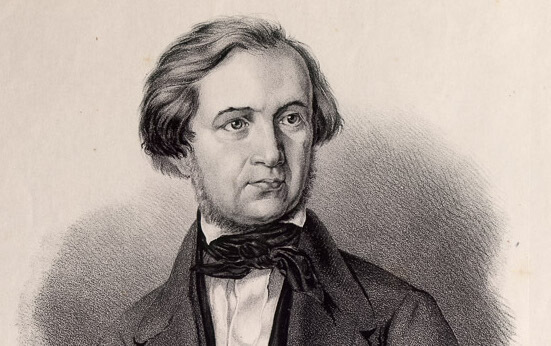
 ‘I do not know who is first, but second, beyond any doubt, is Lipiński.’





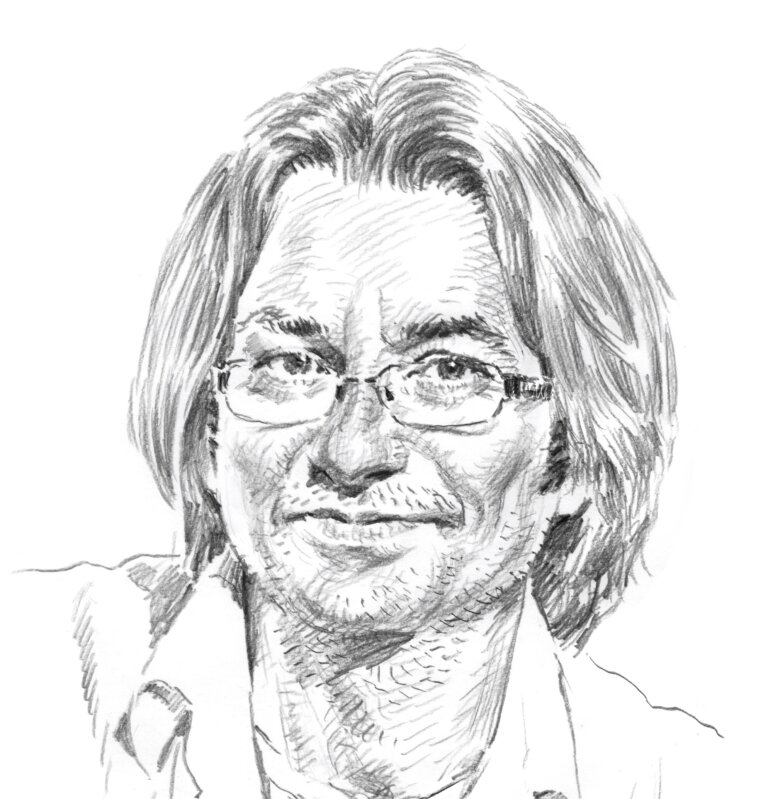
Marcin WĄSOWSKI
That is what Niccolò Paganini replied when asked who the greatest living violin virtuoso might be.
.In the nineteenth century, the phenomenon of virtuosity exerted a profound influence on musical culture. It was rooted in the development and refinement of instruments, which in turn led to the perfecting of performance techniques. At the same time, broader social changes – notably the emancipation of the bourgeoisie – created an audience eager for experiences that promised wonder, even a sense of transcendence. The early decades of the century saw a rapid growth in demand for public concerts and musical education, both professional and amateur. Music publishing expanded, large concert halls were constructed, and instrumental music rose to new prominence. The virtuoso current – in composition as well as performance – was closely bound up with the emergence of the travelling virtuoso, who now appeared within a transformed social landscape: a flourishing amateur movement, newly founded public institutions, expanding conservatoires and an increasingly influential musical press. It is worth bearing in mind, however, that the phenomenon was not without its complexities. On the one hand, virtuosi undeniably invigorated musical life, drawing into concert halls large audiences eager for extraordinary sensations. On the other hand, though, as Professor Irena Poniatowska has observed, ‘virtuosity became, in part, a confusion of ends with the means that lead to artistic expression in music. When it served display alone, it degraded the art of music.’
The Romantic era proved less hospitable to the violin than the Baroque and Classical periods had been. Composers increasingly turned their attention to the piano, which, after 1800, benefited from continual mechanical improvements. As the instrument evolved, it displaced the harpsichord and assumed a dominant position in musical life, relegating the violin to a somewhat secondary role. Yet violin music remained firmly present, sustained in large measure by the intense activity of touring virtuosi, foremost among them the legendary Italian Niccolò Paganini (1782–1841). Among Polish violinists, two figures, today largely forgotten, were among the first to achieve international renown: Feliks Janiewicz (1762–1848) and August Fryderyk Duranowski (1770–1834). Paganini held Duranowski’s technical abilities in high esteem and claimed that it was through him that he came to appreciate the instrument’s full possibilities. Of Janiewicz, the Italian virtuoso spoke with marked respect, addressing him as ‘My Master’. Every violinist of the age wished to be measured against the legendary Genoese. Yet in the judgement of audiences and critics alike, it was most often Karol Lipiński (1790–1861) who was named as his equal. When Paganini himself was asked who the greatest living violin virtuoso might be, he is said to have replied: ‘I do not know who is first, but second, beyond any doubt, is Lipiński.’
The Polish violinist was largely self-taught and may be said to have reached the summit of his art through his own efforts. Regrettably, he left behind no treatise of his own, which, alongside his compositions, would have constituted an invaluable source of insight into his method of refining playing technique. When in June 1829, Lipiński submitted a correction to the Gazeta Warszawska in response to an article containing erroneous information about him, he stated unequivocally: ‘It was my father alone who taught me the rudiments of music; I was not the pupil of any masters, nor a student of any conservatoire.’ Whereas Niccolò Paganini had, albeit informally, sought guidance in both performance and composition from various teachers, Karol Lipiński pursued the study of violin technique independently. His earliest instruction came from his father, Feliks, a conductor, composer and violinist employed by the aristocratic Potocki family at Radzyń (today Radzyń Podlaski, in the Lublin region). After relocating to Lviv in 1799, Karol continued to develop his abilities on his own, drawing upon French violin methods and studying the works of Italian masters, among them Giuseppe Tartini, who maintained that ‘to play well, one must know how to sing well.’ This conscious engagement with the finest traditions of the Italian and French schools proved a decisive step for the young musician and exerted a lasting influence on the course of his artistic career. For a time he also studied the cello – a fact later cited as one explanation for the ‘great tone’ for which he became renowned. Through persistent work on his craft, he gradually established himself as a prominent figure in Lviv’s musical circles. In 1810, he was appointed first violin (concertmaster) of the municipal theatre orchestra, and two years later, he assumed the post of Kapellmeister.
As the years passed, Lipiński felt an increasing need to have his abilities confirmed by an authority of international standing. He therefore resolved to travel to Vienna, where in February 1815 he met one of the foremost violinists and composers of the day, Louis Spohr (1784–1859). The expressions of admiration and encouragement he received there strengthened his conviction that he had chosen the right artistic path. On returning to Lviv, he resigned from his post at the municipal theatre to devote himself more fully to the further refinement of his playing. During this period he supported himself through private tuition and appearances in string quartets. 1818 proved to be a turning point, as it was the year of his long-awaited personal meeting with Niccolò Paganini. The Italian virtuoso was astonished by Lipiński’s abilities and spoke of him in the highest terms, even proposing joint performances. Lipiński, though fascinated by Paganini’s playing, did not become his imitator. He was unwavering in his belief that technique should always serve expressive goals; this principle shaped his entire life. A parallel may be drawn here with two of the greatest pianists of the age. For Fryderyk Chopin, technical command invariably served the communication of deeper musical meaning, whereas Franz Liszt, at times, allowed the virtuoso element of his artistic personality to dominate, so that display risked becoming an end in itself.
In the years that followed, Lipiński’s reputation continued to grow as he performed in cities across Europe. In 1829, he met Paganini once more, this time in Warsaw. On 24 May of that year, during the coronation festivities of Tsar Nicholas I as King of Poland, held at the Royal Castle, the two violinists played side by side at the same desk. Their numerous appearances before Warsaw audiences gave rise to an animated press debate, intent on determining which of them should be deemed superior. The line of division was sharply drawn, and the discussion was fervent. Maurycy Mochnacki sought to reconcile the opposing camps, maintaining that Lipiński and Paganini were artists of equal stature, each distinguished by an individual performing style. Comparison with the Italian virtuoso ensured that European musical circles paid ever closer attention to Lipiński, and the doors of concert halls across the continent opened more readily to him. For any violinist, such a parallel represented the highest form of recognition. Yet Lipiński remained conscious of his own limitations. For that reason, he chose to withdraw for several years from the concert platform to focus once again on perfecting his craft.
In 1835, he embarked upon another tour, and his appearances were greeted with enthusiasm. Leipzig’s Gewandhaus hosted him for two performances during his tour. In a gesture of admiration, Robert Schumann dedicated to the Polish artist his piano cycle Carnaval, Op. 9. In his diary he noted: ‘Lipiński is here. Those three words are enough to quicken the pulse of any music aficionado.’ Paris, meanwhile, stood as one of the most important points on Europe’s musical map. Lipiński could scarcely omit a city that had become an artistic mecca. It has been estimated that around 1840 there were as many as 18,000 pianos in the French capital alone. Upon his arrival, he established contact with members of the Polish émigré community, above all with Fryderyk Chopin, who had by then secured a firm position as both composer and pianist. In December 1831, only a few months after settling there, Chopin had described the city in his own inimitable manner: ‘Paris is everything you could wish for: you may amuse yourself, grow bored, laugh, weep, do whatever pleases you, and no one will so much as glance at you, for thousands are doing precisely the same, each in his own way. I doubt there is anywhere with more pianists than Paris, or anywhere with quite so many fools and quite so many virtuosi.’ Chopin sought to make use of his connections, introducing Lipiński into Parisian musical salons and even giving a performance for the violinist’s benefit. Nevertheless, misunderstandings arose between the two artists – matters which continue to give rise to speculation. Lipiński didn’t achieve widespread recognition in the city. In a letter to his son, Mikołaj Chopin remarked: ‘It is sad that Lipiński does not know how to please, that he finds no success. People’s tastes vary.’ Lipiński managed to win the respect of professional musicians, as specialist press reviews attest, yet he failed to capture the imagination of a broader public. Niccolò Paganini, who had performed in Paris some years earlier, had prepared his visit with meticulous care, even commissioning articles that circulated sensational accounts of his life. Lipiński was unwilling to resort to such promotional devices and thus did not immediately succeed in arousing the interest of the Parisian audience.
Seeking a measure of stability which he had never fully found as a virtuoso travelling across Europe, Lipiński began to apply for the post of concertmaster of the Dresden court orchestra. Dresden possessed a distinguished musical tradition. A court Kapelle and opera had been established there as early as 1548, and the city had been associated with composers of considerable importance to music history, among them Johann Adolf Hasse, Ferdinando Paër and Carl Maria von Weber. Moreover, strong cultural ties had long connected Dresden with Poland during the reigns of the Saxon electors, Augustus II the Strong and Augustus III of Poland. In July 1839 Lipiński assumed the duties of concertmaster of the royal court orchestra and Director of Church Music, a position he was to hold for twenty-two years, until the end of his artistic career. He quickly gained the esteem of the local musical community, raising the standard of the orchestra and acquiring considerable authority. He founded a string quartet – known as the Lipiński Quartet – with which he performed exclusively works by Joseph Haydn, Wolfgang Amadeus Mozart and Ludwig van Beethoven. He was particularly admired for his stylistically assured interpretations of Baroque and Classical repertoire. By the mid-nineteenth century, two distinct currents were gradually emerging: on the one hand, the Romantic-virtuoso approach, foregrounding the performer’s invention, and on the other hand, a more historical orientation, intent upon rendering the composer’s style through the most faithful possible reading of the written score. Lipiński succeeded, with notable effect, in reconciling these traditions. He was an incomparable master of the violin, dazzling audiences with his command of the instrument, yet at the same time he could interpret the works of Baroque and Classical masters with scrupulous stylistic awareness. His knowledge and experience were recognised by publishers, who entrusted him with the preparation of printed editions, including violin works by Johann Sebastian Bach and string quartets by Joseph Haydn.
Niccolò Paganini died in Nice in 1840. In accordance with the Italian virtuoso’s last wishes, eight of the finest instruments from his collection were to be gifted to the most distinguished violinists of the day. Lipiński received an Amati violin, which was yet another unmistakable confirmation of the high standing he enjoyed within the international musical community. In Dresden he was likewise held in considerable esteem at court. In 1852, in recognition of his artistic activity, he was presented by the King of Saxony with a diamond ring. Two years later he received the knight’s cross of the Albert Order, an honour conferred for outstanding service to the royal court. His elevated position within the violin world meant that young aspirants sought his guidance. In 1848, young Henryk Wieniawski came to Dresden for precisely that purpose. Lipiński described the musician to Franz Liszt in the following terms: ‘With the clearest conscience I commend to your care the thirteen-year-old violinist Henryk Wieniawski, a talent of truly exceptional promise.’
Prudently considering his retirement, Lipiński acquired an estate at Urłów (now in Ukraine), where he planned to establish a music school, including a violin class for pupils from impoverished families. His deteriorating health – asthma and partial paralysis of the right arm and wrist – forced him to resign from his duties at the Dresden court. In May 1861, he was formally retired from service. In recognition of his merits, he was granted, ‘by way of exception’, a substantial annual pension of 1,000 thalers. He withdrew to his estate at Urłów, where he died on 16 December of the same year.
Lipiński was the greatest Polish violinist before Henryk Wieniawski and he exerted a formative influence on successive generations of violinists. His compositions constitute an important link between the Classical tradition and the emerging currents of Romanticism. In his writing for the instrument, he introduced advanced techniques, in some respects venturing even further than Niccolò Paganini himself. Although Lipiński’s works are gradually returning to concert programmes, they can only reach their full artistic potential in the hands of the finest musicians, endowed not merely with flawless technical command but also with genuine interpretative vision.
.The history of Polish music offers many figures who once ranked among the leading musical personalities of Europe. Yet a considerable portion of their output has not withstood the test of time. Not least among the reasons is the towering presence of Fryderyk Chopin, whose achievements came to dominate perceptions of nineteenth-century Polish music. Moreover, many composers worked within an aesthetic that continued established Western models, seldom finding the artistic boldness required to break with inherited conventions. Unlike countries such as Germany or France, Poland in the nineteenth century – constrained by the political realities of partition – lacked strongly developed musical institutions capable of promoting the work of its native composers. As for the concert virtuosi of that century, their art of performance has, by its very nature, been lost beyond recovery, preserved neither by recording nor by notation. What remains are reviews, the recollections of eyewitnesses and our own imagination.