 The Polish Dimension and Universality





Artur SZKLENER
What makes the Chopin Competition so remarkable is the unprecedented level of audience interest, this year exceeding even the boldest expectations.
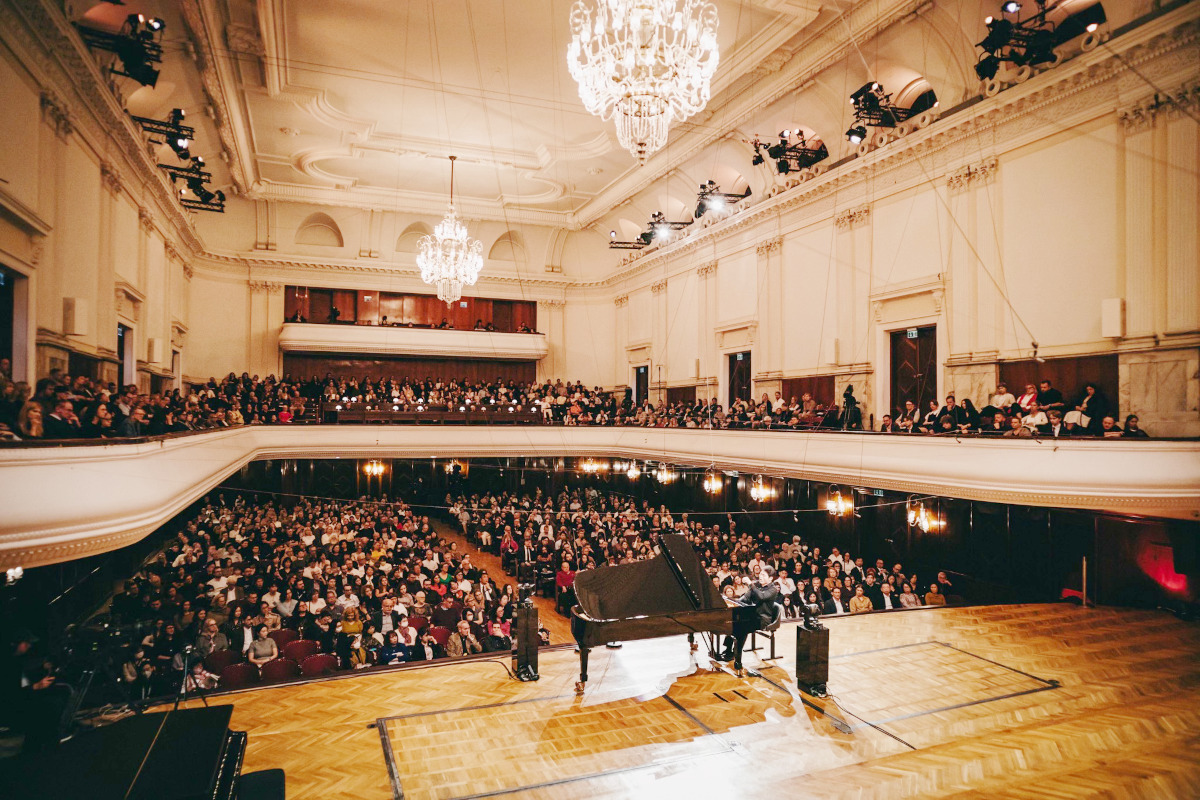
.On October 23rd, the final, lingering notes of the 19th International Chopin Piano Competition echoed through the grand hall of the National Philharmonic in Warsaw. The course of the event and the intensity of the media debate invite reflection on the nature of this phenomenon.
Surviving source documents unequivocally support Fryderyk Chopin’s deep patriotism, his keen concern for his country’s fate and his longing for its long-awaited freedom. Yet it was above all in music that he expressed his national identity. Throughout his life, he composed Polish dances, infusing them with native rhythms and characteristic musical gestures, while also evoking echoes of Polish history and afterimages of its landscapes. At the same time, his art grew out of a centuries-old European tradition. He revered Bach and Mozart almost to the point of veneration, held Beethoven in the highest esteem and was thoroughly familiar with Italian opera and the works of the early Romantics. Drawing on this heritage, he forged a style entirely his own, fully aware that a lasting and meaningful national idiom can emerge only within the sphere of the highest, universal art.
These two perspectives have likewise accompanied the Chopin Competitions from the very beginning, starting with the first edition in 1927. The victory on that occasion of the Russian pianist Lev Oborin drew criticism from some commentators, who lamented what they saw as the loss of the distinctive character of the ‘Polish school’. Others, however, emphasised the value of interpretative diversity. As Karol Stromenger wrote, ‘the genius loci of Warsaw […] imposed no obligation to pursue any single ideal of performance but distinguished the universal human character in Chopin’s music from what is specifically Polish’. This tension, present at the Competition’s very origins, remains one of its defining qualities to this day.
The essence of the Competition lies in inviting outstanding young artists from across the world into a creative dialogue with Chopin’s art. They come from different cultures and bring with them distinct personalities and temperaments. As a result, the prize-winners range from brilliant virtuosos such as Bruce Liu to introspective romantics like Charles Richard-Hamelin to lyrical poets such as Aimi Kobayashi and to philosophical minds like Seong-Jin Cho. Each interprets the Polish composer’s music in a slightly different way, highlighting different facets of it, and each enriches its beauty through that individual vision. What is equally remarkable about this dialogue is the spirit of friendship among the participants: former laureates return to support younger finalists, and some relationships formed beyond the stage grow into lasting bonds. As organisers, we at the Fryderyk Chopin Institute have a long-standing commitment to supporting these remarkable artistic personalities, promoting both the Competition itself and its champions.
For ‘how can one compete in music?’, to quote the question posed by Alexander Gadjiev, winner of second prize at the previous Competition (2021), in Pianoforte, the award-winning documentary by Jakub Piątek. Although the idea of musical rivalry has a long history – Chopin himself followed in Warsaw the celebrated duel between Niccolò Paganini and Karol Lipiński, which, incidentally, ended without a verdict – beauty in art eludes numbers, formulas and objectification. This is especially true when the artistic level becomes exceptionally high and remarkably even, as it did this year owing to a record number of applications from already accomplished pianists. At such a point, clear and fairly obvious criteria – technical command, reliability of memory and complete mastery of the instrument – begin to recede. Judgement must instead turn to ever subtler qualities: tonal aesthetics, the ability to build large musical forms, the ability to convey the various idioms of Chopin’s style or the authenticity of artistic expression. Jurors also weigh artistic maturity and resilience under pressure, seeking to foresee the laureates’ future on the concert stage. For this reason, the highest prizes tend to go to performers of assurance and consistency across all stages, while those of a more spontaneous temperament, who may captivate audiences with particular aspects of their playing, often find themselves placed slightly lower.
.Another striking feature that makes the Chopin Competition so remarkable is the unprecedented level of audience interest, this year exceeding even the boldest expectations. The enthusiasm extends to being present at National Philharmonic hearings held in special listener zones, accessing content through online streaming and engaging in vibrant public debates. Indeed, this involvement, the exchange of views and even the fervour of debates over the verdict may well be counted among the most valuable aspects of this year’s present edition. The fact that millions of people took part so actively, that amid the rush and noise of daily life we found space and time to contemplate art, to discern the differences between superb interpretations, to feel a spiritual affinity with those remarkable young artists closest to our sensibilities and that we were ready to defend our own choices – all this testifies to the genuine integration of classical music into the current of our lives and into our values. I believe Chopin himself would have been both slightly overwhelmed and deeply moved. As for us, what remains is to attempt to preserve at least a fragment of this engagement until the next edition.