 Lwow – Centre of Polish Musical Culture in the Long Nineteenth Century



Michał PIEKARSKI.
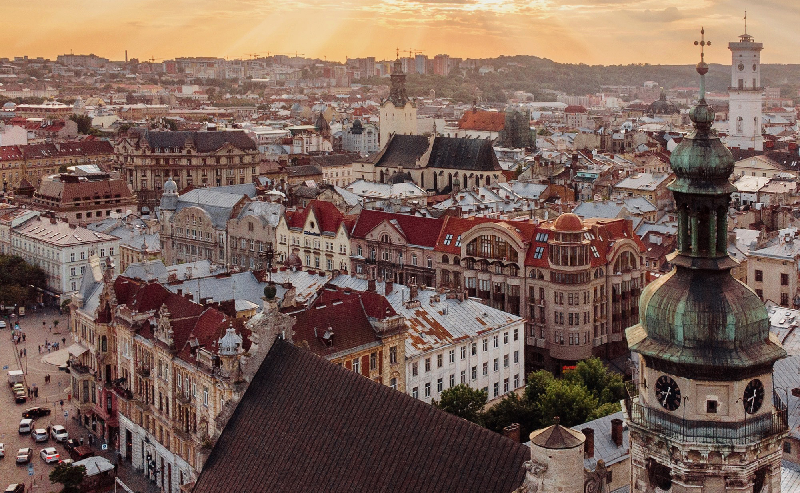
Lwow came to be known as ‘the most musical of Polish cities’ not only because of its official concert life but also owing to its vibrant salon culture.
.In the nineteenth and early twentieth centuries, Lwow was, alongside Warsaw, the most important centre of Polish musical life. This was during the era of the partitions, when Warsaw lay under Russian rule, while Lwow was the largest Polish city within the Austrian Empire. Despite Warsaw’s significantly larger population in 1900 (over 680,000 compared to Lwow’s just over 160,000), the latter frequently matched it in the vibrancy of its musical scene. Indeed, until 1918, Polish opera theatres existed only in these two cities. Lwow’s flourishing musical life – much like its intellectual vitality – was closely tied to the autonomy granted to Poles by the Austrian authorities from the late 1860s, after nearly a century of Germanisation. In Lwow, Polish could be heard not only in sacred spaces and artistic venues like churches, theatres and the conservatoire (a situation similar to Warsaw after 1869) but also in the halls of government offices, lecture rooms at the university and polytechnic and classrooms in state grammar and primary schools. Leading musical establishments of the time were the opera house, with Henryk Jarecki at its helm in the second half of the 1800s (he had studied with Stanisław Moniuszko in Warsaw) and the Galician Music Society, including its conservatoire, presided over by Karol Mikuli, who had been a pupil of Fryderyk Chopin in Paris.
Composers
.In the first half of the nineteenth century, Lwow was home to Karol Lipiński, composer of, among other works, three symphonies and four violin concertos. The latter half of the century saw the presence of Karol Mikuli, a Polish pianist and composer of Armenian heritage, whose output included mazurkas, polonaises and nocturnes for piano. He set German poetry in three song cycles for voice and piano, as well as the solo cantata Die Reue, dedicated to Johannes Brahms. He also composed Polonaise, Op. 7 for three violins, whose central section incorporates the melody of the Polish National Anthem. Opera, meanwhile, was cultivated in Lwow by figures such as Henryk Jarecki and Mieczysław Sołtys, the latter a pupil of Mikuli in Lwow and of Camille Saint-Saëns in Paris. Sołtys also distinguished himself as a composer of oratorios, including The Vows of Jan Kazimierz (premiered in Lwow in 1895), two symphonies (Lwow, 1897 and 1902) and a Piano Concerto in C minor (Lwow, 1893). Jarecki, for his part, wrote works such as the cantata Hugo for soloists, chorus and orchestra (Lwow, 1877). Great popularity was enjoyed by the songs to Polish poetry composed by Stanisław Niewiadomski, another of Mikuli’s students. In the early twentieth century, Lwow audiences warmly welcomed the music of composers associated with the Young Poland movement; Ludomir Różycki even made the city his permanent home between 1908 and 1912. During those years, alongside the opera Bolesław Śmiały, he produced symphonic poems such as Anhelli (premiered in Lwow in 1909) and Warszawianka (Lwow, 1910). Karol Szymanowski also visited the city repeatedly, presenting there for the first time his songs Penthesilea,Op. 18 for soprano and orchestra (1908) and Bunte Lieder, Op. 22 for voice and piano (1912). Both premieres featured Stanisława Korwin-Szymanowska, the composer’s sister who lived permanently in Lwow.
Opera
.The origins of a permanent theatre in Lwow date back to 1776. From the outset, its stage hosted both dramatic and musical productions. For nearly a century the institution maintained two parallel ensembles – a German company, established under the auspices of the Austrian authorities, and a Polish one, created at the initiative of the city’s inhabitants – both performing with orchestral accompaniment. From 1872 onwards, however, only Polish dramatic and operatic troupes remained active in the city. Among the distinguished concertmasters and conductors of the theatre orchestra were Stanisław Serwaczyński and Augustyn Tomasz Braun, as well as the violin virtuoso and composer Karol Lipiński, author of the comic opera Kłótnia przez zakład (Lwow, 1814). In the first half of the nineteenth century, Zabobon, czyli Krakowiacy i Górale, an opera by Karol Kurpiński (formerly associated with the Lwow theatre) enjoyed great popular success, with performances in both Warsaw and Lwow beginning in 1816. The librettist of both versions, Jan Nepomucen Kamiński, served for many years as director of the Polish stage in the city.
In 1842 a new theatre building was erected thanks to the patronage of the Polish aristocrat Stanisław Skarbek. Its auditorium could accommodate 1,500 spectators – more than the Teatr Wielki in Warsaw, opened in 1833. Another grand theatre, designed by the Polish architect Zygmunt Gorgolewski, was inaugurated in Lwow in 1900, an event comparable in prestige to the opening of the Warsaw Philharmonic in 1901. Such monumental buildings stood as architectural manifestos of Polish cultural independence, achieved despite the absence of political statehood. Conductors of the Lwow operatic stage included Henryk Jarecki (1872–1900), followed by Francesco Spetrino and Henryk Opieński; in December 1918, the future international maestro Artur Rodziński made his debut there.
Operas by Stanisław Moniuszko enjoyed enduring popularity in Lwow. The city hosted the local premieres of Halka in 1867 (nine years after its Warsaw premiere of 1858) and The Haunted Manor in 1877 (premiered in Warsaw in 1865). Shortly after its premiere, the Russian authorities removed The Haunted Manor from the Warsaw Opera House’s repertoire. Hence, until 1915, Varsovians wishing to see the opera free from censorship had to travel to Lwow. The Lwow stage also witnessed the premieres of all operas written by Henryk Jarecki, including Mindowe, król litewski (premiere in 1880), Jadwiga, królowa polska (1886), Powrót taty (1897) or Barbara Radziwiłłówna (1893), as well as works by Mieczysław Sołtys, such as Rzeczpospolita babińska (1905), Maria (1909) and Panie Kochanku (1924). The theatre likewise presented Livia Quintilla (1898) by the Warsaw-associated composer Zygmunt Noskowski, and most of the stage works of the Kraków-based Władysław Żeleński, among them Janek, premiered in 1900 to mark the opening of the new theatre building. In 1901, Lwow hosted the Polish premiere of Manru by Ignacy Jan Paderewski – less than a month after its Dresden premiere – and in 1909 the world premiere of Bolesław Śmiały by Ludomir Różycki.
Lwow audiences also witnessed Polish premieres of as many as six operas by Richard Wagner, including Lohengrin (1877), The Flying Dutchman (1903), Rienzi (1899), Das Rheingold (1908), Siegfried (1907) and Götterdämmerung (1911), alongside first Polish stagings of The Tales of Hoffmann by Jacques Offenbach (1884), The Bartered Bride by Bedřich Smetana (1896) and Tosca by Giacomo Puccini (1903). Moreover, until 1914, the Lwow opera company regularly travelled to Kraków as a guest ensemble, performing there in the absence of a resident operatic stage.
A number of distinguished Polish singers were associated with the Lwow operatic stage, many of them artists of international stature. Among these were Teresa Arklowa, Adam Didur and Helena Zboińska-Ruszkowska – all of whom also appeared at La Scala – as well as Józef Mann and Konrad Zawiłowski, who sang at the Vienna Court Opera, the latter notably becoming the first Pole to perform at Bayreuth. A celebrated diva of both Lwow and Warsaw was Janina Korolewicz-Waydowa, who appeared at the Royal Opera House in Covent Garden (London) and at the Teatro Real (Madrid). Among soloists of Ukrainian origin linked to the Lwow stage were Oleksandr Myshuga and, for a time, Solomiya Krushelnytska, who likewise sang at La Scala. All the singers mentioned also appeared at the Warsaw Opera House. It was in Lwow, too, that Marcelina Sembrich-Kochańska received her earliest musical training before going on to become for many years a leading diva of the Metropolitan Opera in New York, while still returning as a guest artist to the Lwow stage.
Instrumental Music and Musical Societies
.In the first half of the nineteenth century, Lwow was home to the violin virtuosos Karol Lipiński and Stanisław Serwaczyński, both of whom lived and performed in the city. A notable Austrian pianist active there until 1838 was Franz Xaver Wolfgang Mozart, son of Wolfgang Amadeus Mozart, who settled in Lwow under the patronage of the Polish aristocracy. For leading noble families such as the Baworowskis, Rzewuskis and Skarbeks (related to the Żelazowa Wola branch of that lineage), he composed piano works, including polonaises. Guest artists appearing in Lwow included the pianists Maria Szymanowska and Józef Krogulski, the violinists Jacques Féréol Mazas and Ignaz Schuppanzigh (teacher and friend of Ludwig van Beethoven) and the celebrated singer Angelica Catalani. In 1838, the city also witnessed the debut of eight-year-old pianist Teodor Leszetycki, who was born in Łańcut, a town located around 150 kilometres away.
The Galician Music Society was founded in 1838 and presented instrumental and oratorio repertoire performed by both professionals and amateurs. Its directors included co-founder Jan Ruckgaber, a pianist and composer of Austrian-French descent, as well as Karol Mikuli (1858–1887) and Mieczysław Sołtys (1899–1929). Concerts organised by the Society brought to Lwow such figures as Franz Liszt (1847), Stanisław Moniuszko (1865) – who presented his cantata Widma after Part II of Dziady by Adam Mickiewicz shortly after its Warsaw premiere – and Johannes Brahms with Joseph Joachim (1880). Also appearing were Władysław Żeleński (including in 1885), Zygmunt Noskowski (1889), Feliks Nowowiejski (1906) and Ludomir Różycki (1908). The premieres of two piano concertos by Henryk Melcer-Szczawiński (in E minor and C minor) took place in Lwow in 1896 and 1898; both works were later performed in major concert halls in Warsaw, Vienna, Berlin and Paris. The city also hosted the premiere of the oratorio Znalezienie św. Krzyża in 1909 and, in 1913, a performance of Quo Vadis by Nowowiejski.
In 1902 the Lwow Philharmonic was established in the Skarbek Theatre building under the direction of Ludwik Heller. The following year brought composers’ concerts featuring Richard Strauss, Gustav Mahler, Ruggero Leoncavallo and Mieczysław Karłowicz, including the Polish premiere of Karłowicz’s Symphony in E minor Rebirth, Op. 7, heard in Lwow shortly after its Berlin unveiling. Conductors associated with the institution included Ludvik Ćelanský and Henryk Melcer-Szczawiński.
The city also witnessed the founding of further Polish musical societies, among them the choirs Lutnia (1881) and Echo (1886). The Ukrainian community – the third largest after the Polish and Jewish populations – likewise established its own institutions, including the societies Teorban (1870) and Bojan (1890), which attracted composers like Stanyslav Liudkevych, creator of the symphonic cantata Kawkaz (debuted in Lwow in 1914), and Vasyl Barvinsky. In 1903 the distinguished Kiev musician Mykola Lysenko also appeared there as a guest artist.
Across more than thirty Roman Catholic churches serving the Polish community, organists – and often choirs as well – were active participants in liturgical music-making. Among notable organ-building firms was that run from 1876 by Jan Śliwiński. At the Roman Catholic cathedral, liturgical services featured masses by Joseph Haydn and Wolfgang Amadeus Mozart (including the Missa brevis in F major), as well as sacred works by Karol Kurpiński, Stanisław Moniuszko and Henryk Jarecki. Mozart’s Requiem in D minor was also heard there on numerous occasions. Musical directors at the Dominican church included Stanisław Serwaczyński, Augustyn Tomasz Braun and Jarecki himself, who also held responsibilities at the cathedral.
Lwow came to be known as ‘the most musical of Polish cities’ not only because of its official concert life but also owing to its vibrant salon culture. Among the most celebrated was that hosted by the pianist Leonia Wildowa, where guests included Karol Mikuli and the Austrian pianist Joseph Christoph Kessler, while the poet Kornel Ujejski could be heard there as a declaimer. At the home of Kazimierz Twardowski, professor of philosophy at Lwow University and himself a pianist, performances were given by the pianist Helena Ottawowa together with renowned singers such as Janina Korolewicz-Waydowa, Ada Sari and Zofia Drexler-Pasławska.
The Conservatoire
.At the foundation of Lwow’s flourishing musical culture lay its system of musical education, which nurtured both professional musicians and an informed listening public. Before 1914, the city – with a population of just over 200,000 – supported more than fifty music schools of varying size and level. The origins of the largest of these, the Conservatoire of the Galician Music Society, date back to 1853, and its leadership traditionally rested with the Society’s directors. In 1906 the institution acquired an impressive new building designed by the Polish architect Władysław Sadłowski. At times, the Conservatoire enrolled even more students than the Music Institute in Warsaw – a city four times larger – which had been founded in 1861 and operated in comparatively cramped quarters. In 1870, for instance, there were 199 students in Lwow and 116 in Warsaw; by 1906 the figures had risen to 440 and 403 respectively. Young Poles from other cities and partitions often travelled to Lwow specifically to pursue their musical education. Karol Mikuli trained around a hundred pianists there, passing on to them the subtleties of interpreting Fryderyk Chopin. Among his pupils were Raul Koczalski, Maurycy Rosenthal, Leonia Wildowa and Władysław Wszelaczyński, who later directed a piano class of his own. Aleksander Michałowski – later teacher of Jerzy Lefeld and Bolesław Woytowicz – even travelled specially from Warsaw to study with him. Under the guidance of Mieczysław Sołtys trained such composers as Tadeusz Zygfryd Kassern, Tadeusz Majerski, Adam Sołtys and Władysław Walewski, along with conductors including Adam Dołżycki, Józef Lehrer and Tadeusz Sygietyński, as well as musicologists such as Zdzisław Jachimecki and Hieronim Feicht. Among the distinguished piano pedagogues was also Henryk Melcer-Szczawiński, a former pupil in Vienna of Theodor Leschetizky; his own students included Helena Ottawowa and Mieczysław Horszowski. Most of the opera soloists mentioned earlier, meanwhile, had studied in the class of Walery Wysocki. Lwow, alongside Kraków, also became a cradle of Polish musicological scholarship. In 1912, Adolf Chybiński inaugurated the first lectures in the field at Lwow University and, in 1917, he assumed the first Polish chair of musicology.
Chopin Traditions
.In 1910, the centenary of Fryderyk Chopin’s birth transformed Lwow into the principal Polish centre of commemorative celebrations. Former pupils of Karol Mikuli – notably Mieczysław Sołtys and Stanisław Niewiadomski – served on the organising committee for the Centenary Celebrations of Chopin’s Birth, held in conjunction with the First Congress of Polish Musicians. Among the highlights were four Philharmonic concerts devoted respectively to Polish music from the sixteenth to the nineteenth centuries, to Chopin himself, and to contemporary Polish composers. The pianists appearing included Maurycy Rosenthal, Ernest Schelling and Henryk Melcer-Szczawiński. Ignacy Jan Paderewski delivered an address, while papers were presented, among others, by Kornelia Löwenherz-Parnas, a Polish pianist of Jewish origin and former pupil of Mikuli, who before 1914 founded in Lwow the first Chopin museum on Polish soil. The congress also included a composition competition, in which Karol Szymanowski won the prize for best piano work with his Piano Sonata No. 1 in C minor, Op. 8.
The events held in Lwow in 1910 not only honoured the centenary of Chopin’s birth but also formed a major patriotic demonstration of supra-local significance. They underscored the city’s status as an informal capital of Polish culture under the partitions, a role for which abundant evidence had accumulated over the preceding decades.